1970s · 1970s · African American
Production
one-of-a-kind
Material
synthetic fiber
Culture
African American
Movement
Afrofuturism · Disco
Influences
Afrofuturistic design · 1970s theatrical costume
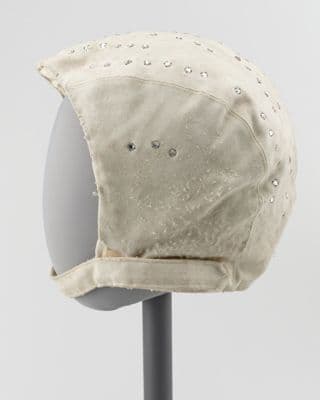
A close-fitting theatrical headpiece constructed from cream-colored synthetic fabric with a bonnet-like silhouette. The cap features decorative metallic studs or grommets arranged in rows along the curved edges and scattered across the surface. The construction shows visible seaming and appears to have tie closures at the chin area. The fabric has a slightly textured appearance with some areas showing wear or intentional distressing. This piece was designed as a costume element for The Wiz Broadway production, reflecting the show's Afrofuturistic interpretation of classic Oz characters through 1970s theatrical design sensibilities.
Lineage: “1970s theatrical costume”
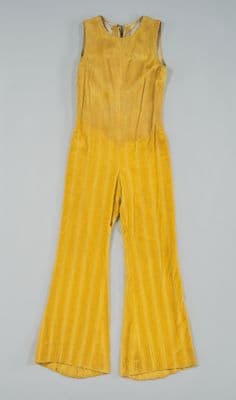
That golden velveteen jumpsuit with its princess seaming and flared legs is pure 1970s theatrical ambition—the kind of costume that caught stage lights and threw them back in molten streaks. The cream skull cap, studded with rhinestones in careful rows, shows the same era's obsession with transforming the performer's entire silhouette from head to toe.
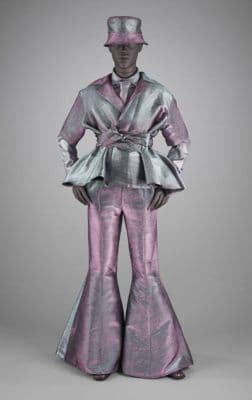

The skull cap's constellation of metal studs and the jumpsuit's liquid-mercury sheen both channel the same Afrofuturistic impulse to armor the Black body in otherworldly materials. Fifty years separate these pieces, but they share DNA in how they use reflective, synthetic surfaces to project power and possibility—the cap's deliberate punctures creating a protective crown, the jumpsuit's full-body iridescence suggesting a being who has transcended earthly limitations.

Follow this garment wherever the graph leads
The skull cap's constellation of metal studs and the jumpsuit's liquid-mercury sheen both channel the same Afrofuturistic impulse to armor the Black body in otherworldly materials. Fifty years separate these pieces, but they share DNA in how they use reflective, synthetic surfaces to project power and possibility—the cap's deliberate punctures creating a protective crown, the jumpsuit's full-body iridescence suggesting a being who has transcended earthly limitations.
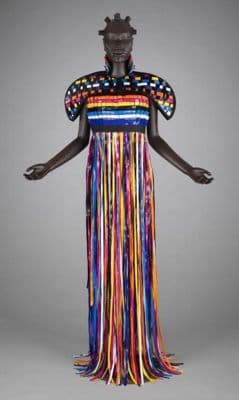
The cream skull cap's constellation of studs and the Senegalese dress's electric ribbons of PVC both transform synthetic materials into something ceremonial, something that catches light and commands attention. Forty years separate them, but they share the same radical gesture: taking industrial materials—synthetic fiber, plastic coating—and turning them into vessels for cultural expression and performance.
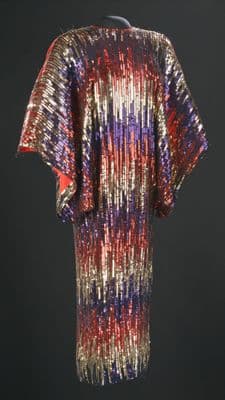
These two pieces capture the dual nature of 1970s performance dressing — one all flash and fever, the other pure function. The caftan's cascading sequins in patriotic stripes scream disco spectacle, built to catch every spotlight and mirror ball reflection, while the skull cap's modest cream fabric dotted with tiny rhinestones whispers backstage practicality.

The cream skull cap's constellation of studs and the Senegalese dress's electric ribbons of PVC both transform synthetic materials into something ceremonial, something that catches light and commands attention. Forty years separate them, but they share the same radical gesture: taking industrial materials—synthetic fiber, plastic coating—and turning them into vessels for cultural expression and performance.