V&A
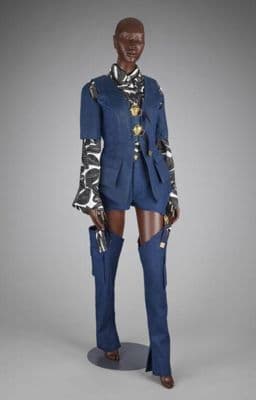
Navy Blue Hessian Military Jacket Ensemble
2010s · 2010s · Ivorian
Designer
Loza Maléombho
Production
ready-to-wear
Material
hessian
Culture
Ivorian
Movement
Afrofuturism · Dark Academia
Influences
military uniform tailoring · colonial reinterpretation
This ensemble features a navy blue hessian military-style jacket with pronounced structured shoulders and double-breasted closure with metallic buttons. The jacket displays sharp tailoring with fitted waist and flared skirt-like hem. Underneath is a black and white geometric patterned shirt with contrasting collar and cuffs. The bottom consists of matching navy blue shorts paired with thigh-high boot-chaps that create a seamless leg line. The construction emphasizes architectural silhouetting through the interplay of fitted and voluminous elements. The hessian fabric provides textural weight while the military-inspired detailing including epaulettes and button placement references colonial uniforms, recontextualized through contemporary African design perspective.
jacketfit and flarecollarlesship length
Connected To
Influences·military uniform tailoring
SHARED30 years · cross-culture
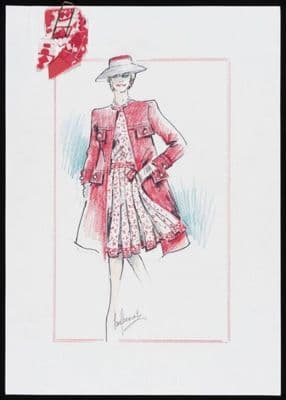
The pink wool suit's razor-sharp lapels and regimental double-breasted closure echo the same military DNA that surfaces three decades later in the navy hessian jacket, where brass buttons march down the front like a hussar's uniform.
Echoes Across Time
2010s → 1970s · 40yr58%
SHARED
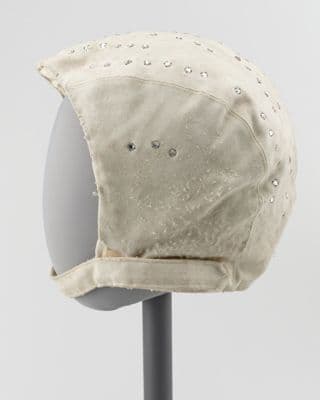
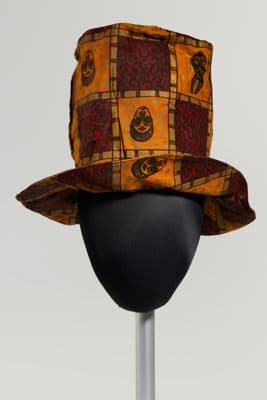
The Ivorian designer's reworked Hessian military jacket and the 1970s Afrofuturist hat both weaponize European symbols of power, turning them into tools of cultural reclamation.
Movement·Afrofuturism
2010s → 1970s · 40yr56%
SHARED
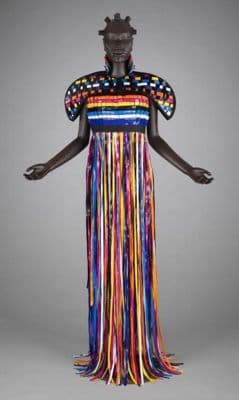
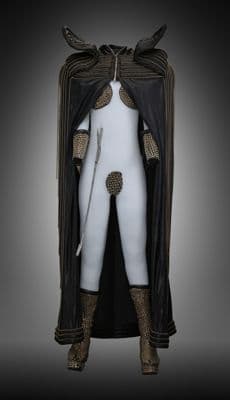
The blue military jacket's baroque braiding and the white bodysuit's sculptural cape both weaponize ornament as armor, creating silhouettes that command space through calculated drama. Forty years apart, they share Afrofuturism's core strategy of reimagining power dressing—the earlier piece through sleek, space-age minimalism punctuated by strategic gold details, the later through maximalist military pomp that turns historical uniform codes inside out.
Pull the Thread→
Follow this garment wherever the graph leads