SMITHSONIAN
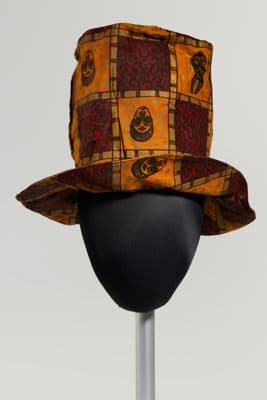
Burnt Orange Cotton High Crown Hat with Mask Print
1970s · 1970s · African American
Production
ready-to-wear
Material
cotton
Culture
African American
Movement
Black Power movement · Afrofuturism · Hippie / Counterculture
Influences
African traditional masks · 1970s Afrocentric fashion
A tall cylindrical hat with a structured crown approximately 6 inches high and a medium-width brim that curves slightly downward. The cotton fabric features a bold geometric pattern with rectangular panels in burnt orange alternating with dark red sections containing repeated mask or face motifs. The design appears to be machine-printed with crisp, defined edges between color blocks. Black linear elements create grid-like divisions between the colored sections, while golden yellow accents highlight certain geometric elements. The hat's construction shows clean seaming and maintains its rigid shape, typical of structured millinery techniques. The African-inspired mask imagery and earth-tone color palette reflect the cultural pride movements of the 1970s.
hat
Connected To
65%
Movement·AfrofuturismTechnique·block-printing
SHARED50 years · cross-culture · cross-category
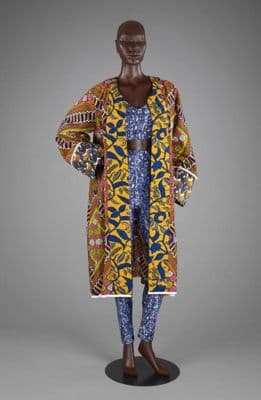
That 1970s hat with its geometric mask motifs and the contemporary ankara robe are separated by fifty years but united by the bold geometry of African-inspired block printing—both use repeating patterns that flatten and stylize the human form into powerful graphic statements. The hat's burnt orange field populated with stylized faces echoes the robe's confident collision of triangles, diamonds, and abstract figures, each garment treating pattern not as decoration but as cultural armor.
Movement·Afrofuturism
SHARED40 years · cross-culture · cross-category
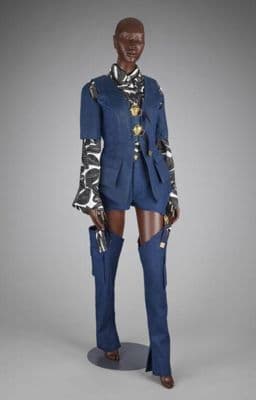
The Ivorian designer's reworked Hessian military jacket and the 1970s Afrofuturist hat both weaponize European symbols of power, turning them into tools of cultural reclamation.
Text55%
56%
Movement·Afrofuturism
SHARED40 years · cross-culture · cross-category
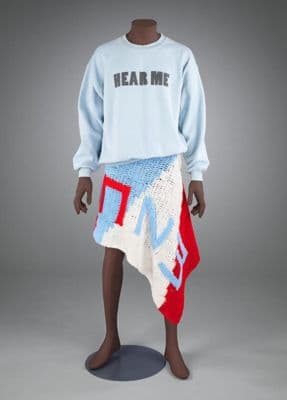
The baby blue sweatshirt's stark "HEAR ME" declaration and that wildly asymmetrical skirt—part denim patchwork, part red geometric interruption—carries the same insurgent spirit as the 1970s hat with its bold African mask motifs arranged like a visual manifesto. Both pieces weaponize everyday garments (the humble sweatshirt, the simple bucket hat) by loading them with cultural symbols and unexpected proportions that demand attention rather than request it.
54%
Movement·Hippie / CountercultureTechnique·block-printingTechnique·machine-weaving
SHAREDsame era · cross-culture · cross-category
Pull the Thread→
Follow this garment wherever the graph leads