2020s · 2020s · Nigerian
Designer
Lisa Folawiyo
Production
ready-to-wear
Material
ankara printed cotton
Culture
Nigerian
Movement
Afrofuturism · Dopamine Dressing
Influences
traditional West African boubou · contemporary athleisure layering
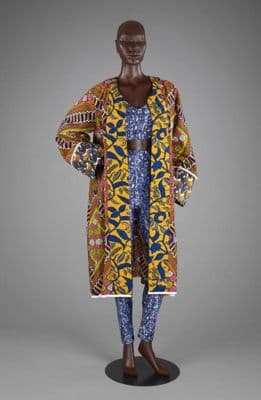
This contemporary Nigerian ensemble features a knee-length robe in vibrant ankara fabric with bold geometric patterns in golden yellow, blue, and black. The robe has an open front construction with wide three-quarter sleeves and a relaxed, flowing silhouette that drapes away from the body. Underneath, fitted blue leggings and a matching crop top create a layered look that balances the voluminous outer garment. The ankara textile displays traditional West African wax-resist printing techniques with repeating geometric motifs. The styling represents modern African fashion design that bridges traditional textile heritage with contemporary urban silhouettes, characteristic of Lagos fashion innovation in the 2020s.


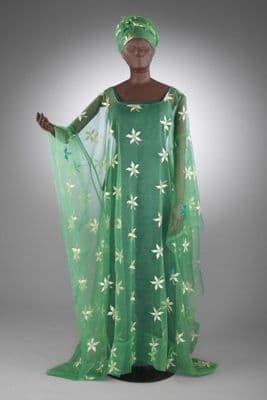
The Nigerian ankara robe borrows the grand sweep and ceremonial presence of the traditional Senegalese boubou, but strips away its aristocratic restraint for something more democratic and bold. Where the green silk organza flows like water with its delicate embroidered stars scattered across the surface, the ankara cotton asserts itself through geometric African wax prints that refuse to whisper.

Follow this garment wherever the graph leads
The Nigerian ankara robe borrows the grand sweep and ceremonial presence of the traditional Senegalese boubou, but strips away its aristocratic restraint for something more democratic and bold. Where the green silk organza flows like water with its delicate embroidered stars scattered across the surface, the ankara cotton asserts itself through geometric African wax prints that refuse to whisper.
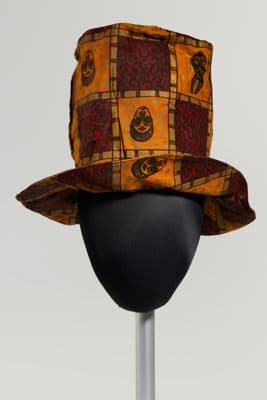
That 1970s hat with its geometric mask motifs and the contemporary ankara robe are separated by fifty years but united by the bold geometry of African-inspired block printing—both use repeating patterns that flatten and stylize the human form into powerful graphic statements. The hat's burnt orange field populated with stylized faces echoes the robe's confident collision of triangles, diamonds, and abstract figures, each garment treating pattern not as decoration but as cultural armor.

That 1970s hat with its geometric mask motifs and the contemporary ankara robe are separated by fifty years but united by the bold geometry of African-inspired block printing—both use repeating patterns that flatten and stylize the human form into powerful graphic statements. The hat's burnt orange field populated with stylized faces echoes the robe's confident collision of triangles, diamonds, and abstract figures, each garment treating pattern not as decoration but as cultural armor.