V&A
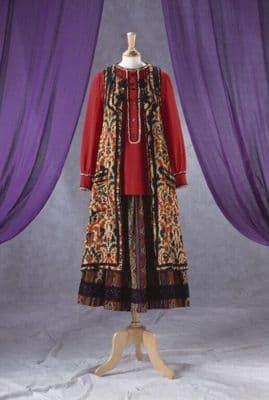
Deep Red Cotton Paisley Bohemian Maxi Petticoat
1970s · 1970s · British
Designer
Gina Fratini
Production
ready-to-wear
Material
cotton
Culture
British
Movement
Bohemian Revival · Hippie / Counterculture
Influences
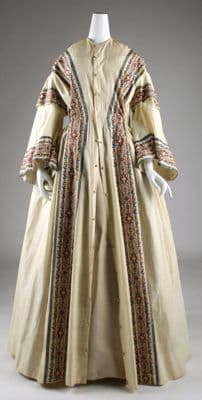
Indian paisley shawls · Victorian dressing gowns
A floor-length coat-dress featuring a rich red base with elaborate paisley and floral patterning in gold and burgundy tones. The garment has wide, flowing sleeves and opens at the front, revealing a black undergarment or lining. The textile displays intricate paisley motifs and botanical designs characteristic of 1970s bohemian fashion's fascination with Eastern textiles. Black fringe trim edges the hemline, adding movement and texture. The loose, unstructured silhouette drapes freely from the shoulders, embodying the era's rejection of fitted, structured garments in favor of comfort and artistic expression through textile design.
skirta-linemaxi
Connected To
Movement·Bohemian Revival
SHARED50 years · cross-culture · cross-category
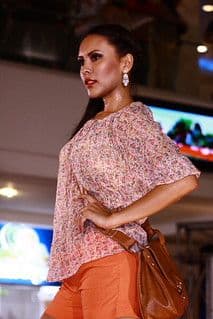
These two pieces trace the long arc of bohemian romanticism, from the 1970s maxi's theatrical peasant drama—with its deep burgundy ground, ornate paisley borders, and that wonderfully excessive length—to the 2010s off-shoulder blouse's more digestible version of the same fantasy. The earlier dress commits fully to the costume, while the pink floral top offers bohemian flavor without the full medieval maiden commitment.
Echoes Across Time
2010s → 1970s · 50yr58%
SHARED
These two pieces trace the long arc of bohemian romanticism, from the 1970s maxi's theatrical peasant drama—with its deep burgundy ground, ornate paisley borders, and that wonderfully excessive length—to the 2010s off-shoulder blouse's more digestible version of the same fantasy. The earlier dress commits fully to the costume, while the pink floral top offers bohemian flavor without the full medieval maiden commitment.
Movement·Bohemian Revival
Great Depression → 1970s
Pull the Thread→
Follow this garment wherever the graph leads