FASHIONPEDIA
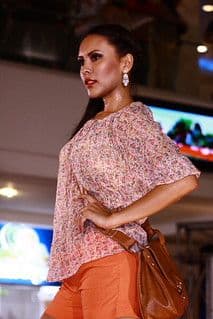
Floral Cotton Peasant Blouse Off-Shoulder Sleeves
2010s · 2020s · Western
Production
ready-to-wear
Material
lightweight cotton
Culture
Western
Movement
Bohemian Revival · Gorpcore
Influences
European peasant blouses · bohemian folk dress
A loose-fitting peasant blouse with three-quarter length sleeves and an off-shoulder neckline that can be worn on or off the shoulders. The lightweight cotton fabric features a small-scale floral print in muted tones of dusty pink, cream, and burgundy. The blouse has a relaxed, unstructured silhouette that drapes softly over the torso without defining the waist. The sleeves are full and gathered at the cuff, creating gentle volume. The neckline appears to have elastic or drawstring construction allowing for adjustable positioning. This style exemplifies the bohemian aesthetic of the hippie movement with its emphasis on natural fabrics, comfortable fit, and romantic peasant-inspired details that rejected the structured tailoring of previous decades.
toploose fitround neckabove-the-hip
Connected To
Movement·Bohemian Revival
SHARED50 years · cross-culture · cross-category
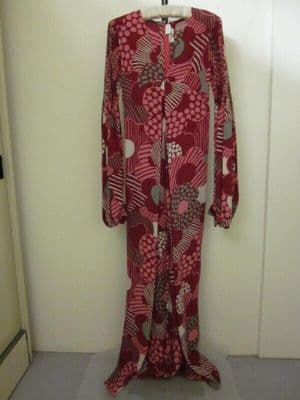
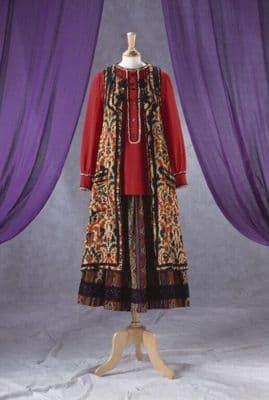
The floral peasant blouse with its off-shoulder drape and the burgundy silk caftan's flowing sleeves are separated by five decades but united by fashion's eternal romance with bohemian ease. Both garments reject structured tailoring for soft, body-skimming silhouettes that suggest freedom of movement — the blouse's gathered neckline echoing the caftan's loose, unbelted torso.
Echoes Across Time
2010s → 1970s · 50yr59%
SHARED
The floral peasant blouse with its off-shoulder drape and the burgundy silk caftan's flowing sleeves are separated by five decades but united by fashion's eternal romance with bohemian ease. Both garments reject structured tailoring for soft, body-skimming silhouettes that suggest freedom of movement — the blouse's gathered neckline echoing the caftan's loose, unbelted torso.
Movement·Bohemian Revival
2010s → 1970s · 50yr58%
Pull the Thread→
Follow this garment wherever the graph leads