SMITHSONIAN
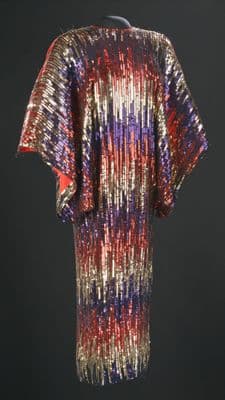
Sequined Striped Performance Caftan Dress
1970s · 1970s · Cuban-American
Production
one-of-a-kind
Material
sequined fabric
Culture
Cuban-American
Movement
Salsa Music Movement · Disco
Influences
Japanese kimono silhouette · Middle Eastern caftan
A floor-length performance caftan constructed from heavily sequined fabric in metallic silver, red, blue, and gold vertical stripes. The garment features wide kimono-style sleeves that extend horizontally, creating a dramatic wingspan silhouette. The sequins are densely applied in vertical columns that catch and reflect light, creating a shimmering cascade effect from neckline to hem. The loose, flowing construction allows for freedom of movement during performance while the high neckline and full coverage design maintains modesty. This type of heavily embellished caftan became signature stage wear for Latin music performers in the 1970s, combining theatrical glamour with cultural references to traditional flowing robes.
dressloose fitv-neckfloor length
Connected To
Influences·Middle Eastern caftanMovement·Disco
SHAREDsame era · cross-culture
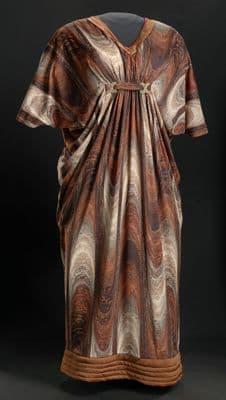
These two caftans capture the 1970s' obsession with transforming ancient Middle Eastern silhouettes into pure American theater. The bronze dress whispers its glamour through that shimmering metallic fabric and high empire waist—it's Studio 54 by way of a Byzantine empress—while the sequined number screams it through cascading vertical stripes that catch light like a human disco ball.
Pull the Thread→
Follow this garment wherever the graph leads