V&A
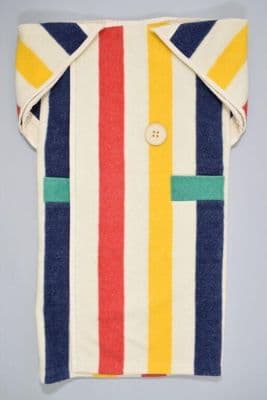
Navy Blue Red Yellow Striped Wool Blanket Coat
1990s · 1990s · French
Designer
Jean Charles De Castelbajac
Production
ready-to-wear
Material
wool blanket
Culture
French
Movement
Conceptual Fashion · Minimalism
Influences
Japanese kimono silhouette · Hudson Bay blanket stripes
This oversized coat features bold vertical stripes in primary colors—navy blue, red, yellow, and green—separated by cream bands. The garment displays a distinctive boxy, kimono-inspired silhouette with wide, angular sleeves that create dramatic geometric lines. A single cream button provides minimal closure at the chest. The construction appears to utilize actual blanket material, giving the piece substantial weight and texture. The striped pattern runs continuously across the body and sleeves, creating an uninterrupted graphic statement. This piece exemplifies 1990s conceptual fashion's approach to deconstructing traditional tailoring, transforming utilitarian blanket material into high fashion through bold color blocking and architectural cutting.
coatoversizedcollarlessknee length
Connected To
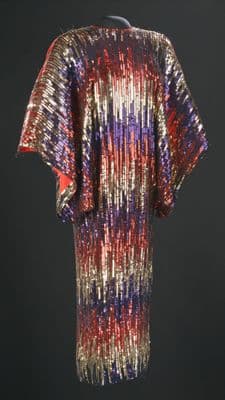
Influences·Japanese kimono silhouetteMotif·stripe-band
SHARED20 years · cross-culture · cross-category
The 1970s sequined caftan turns stripes into pure theater—those vertical bands of red, blue, and gold sequins catch light like a human disco ball, each stripe a shimmering column that moves with the body. Two decades later, the French blanket coat takes the same stripe DNA and makes it monastic: thick woolen bands in primary colors that lie flat and still, more Mondrian than Studio 54.
Echoes Across Time
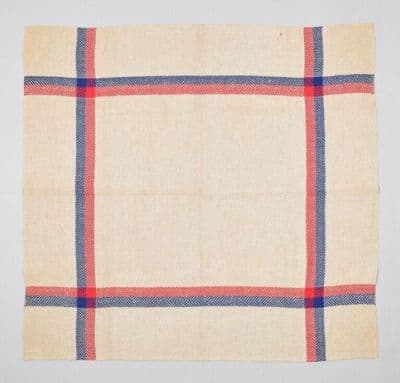
Pull the Thread→
Follow this garment wherever the graph leads