SMITHSONIAN
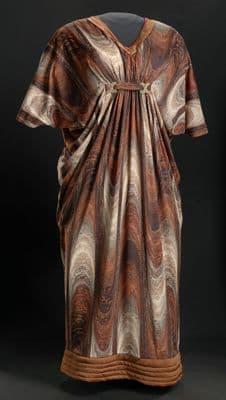
Bronze Metallic Caftan Evening Dress with Empire Waist
1970s · 1970s · American
Production
ready-to-wear
Material
synthetic fiber with metallic accents
Culture
American
Movement
Bohemian Revival · Disco
Influences
Middle Eastern caftan · 1970s bohemian style
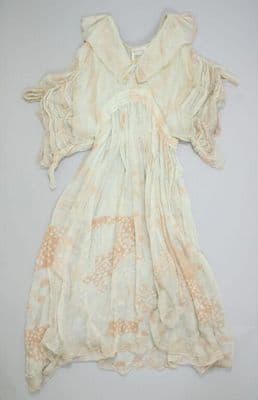
A flowing caftan-style dress with a high empire waistline gathered beneath the bust with a decorative belt or sash. The garment features wide, kimono-like sleeves that extend to mid-forearm length. The fabric displays an elaborate paisley or swirled pattern in metallic bronze, gold, and copper tones against a lighter background. The dress falls to ankle length in a straight, unstructured silhouette typical of 1970s loungewear-inspired formal wear. The neckline appears to be a simple V-neck or scoop style. The overall construction emphasizes comfort and ease of movement while maintaining an elegant, sophisticated appearance suitable for evening entertainment.
dressloose fitv-neckmaxi
Connected To
Influences·Middle Eastern caftanMovement·Disco
SHAREDsame era · cross-culture
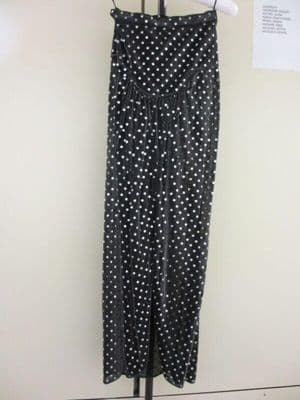
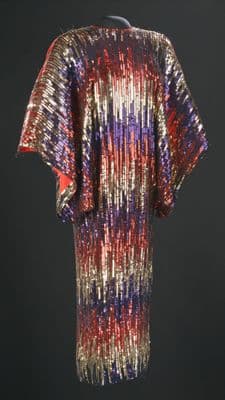
These two caftans capture the 1970s' obsession with transforming ancient Middle Eastern silhouettes into pure American theater. The bronze dress whispers its glamour through that shimmering metallic fabric and high empire waist—it's Studio 54 by way of a Byzantine empress—while the sequined number screams it through cascading vertical stripes that catch light like a human disco ball.
Echoes Across Time
1970s → 2010s · 50yr56%
SHARED
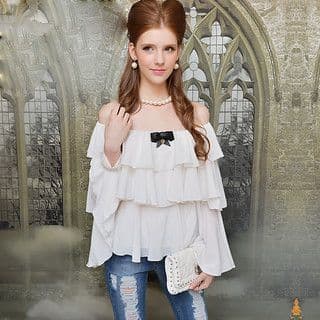
That bronze caftan's empire waist and billowing sleeves carry the same romantic rebellion as the white peasant blouse's off-shoulder ruffle—both garments reject the structured silhouette for something looser, more sensual. The caftan's metallic sheen and floor-sweeping drama made bohemian dressing glamorous for 1970s evenings, while the peasant blouse strips that same anti-establishment spirit down to daytime cotton, proving how thoroughly the boho aesthetic colonized American wardrobes.
Movement·Bohemian Revival

1990s → 1970s
Pull the Thread→
Follow this garment wherever the graph leads