1970s · 1970s · British
Designer
Bill Gibb
Production
ready-to-wear
Material
sequined lurex
Culture
British
Movement
Disco
Influences
1970s disco glamour · metallic textile innovation
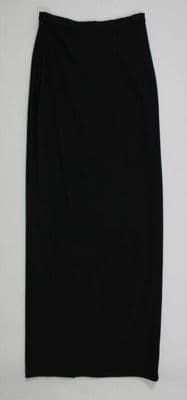
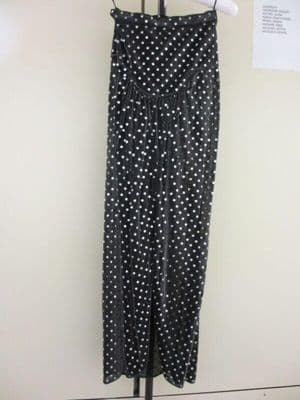
A floor-length evening skirt in black lurex fabric densely covered with silver sequins arranged in an all-over polka dot pattern. The skirt features a high waistband and flows in a straight, column-like silhouette to the floor. The sequins catch light across the entire surface, creating the shimmering, glamorous effect characteristic of disco-era evening wear. The lurex base fabric provides structure while maintaining fluidity of movement. The polka dot sequin arrangement creates regular geometric patterning against the dark ground. This piece exemplifies late 1970s evening fashion's emphasis on metallic surfaces and light-reflecting materials designed for nightclub and formal social environments.
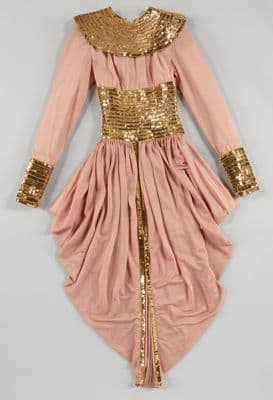
These two pieces capture the disco era's twin obsessions: body-conscious glamour and maximum sparkle, but they reveal how differently American and British designers interpreted the mandate to shine. The pink dress, with its strategic sequin placement creating a gilded corset effect over draped fabric, shows the American approach—structured seduction that emphasizes the waist and hips through calculated embellishment.
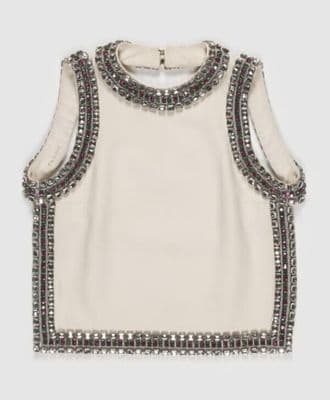
These two pieces reveal how disco's metallic fever dream refuses to die, just shape-shifts across decades. The 1970s lurex maxi skirt captures the era's full-throttle maximalism—that all-over sequined surface designed to catch every strobe light in the room—while the contemporary sleeveless top distills the same glittery impulse into something more surgical, confining its metallic embroidery to precise geometric borders around the neckline and armholes.

Follow this garment wherever the graph leads
These two pieces reveal how disco's metallic fever dream refuses to die, just shape-shifts across decades. The 1970s lurex maxi skirt captures the era's full-throttle maximalism—that all-over sequined surface designed to catch every strobe light in the room—while the contemporary sleeveless top distills the same glittery impulse into something more surgical, confining its metallic embroidery to precise geometric borders around the neckline and armholes.
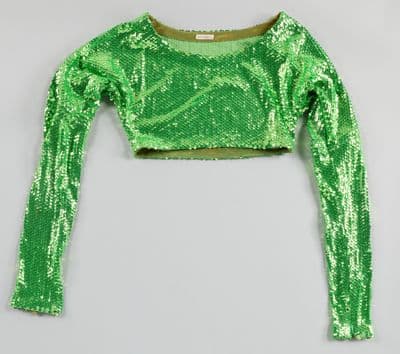
The emerald crop top's all-over sequins catch light with the same hungry intensity as the polka-dotted maxi's scattered discs, but twenty years of club culture separate their ambitions. Where the '70s skirt deploys its sparkle strategically—those precise dots creating rhythm across black lurex like a disco ball's reflection on a dance floor—the '90s top goes full maximalist, every inch armored in green sequins that scream rave rather than whisper Studio 54.
These two black column skirts reveal how the same silhouette can serve completely different evenings—the '90s wool crepe version is all about that severe, minimalist elegance that Calvin Klein and Helmut Lang perfected, while the '70s sequined lurex number sparkles with the kind of Studio 54 glamour that demanded movement under disco lights.

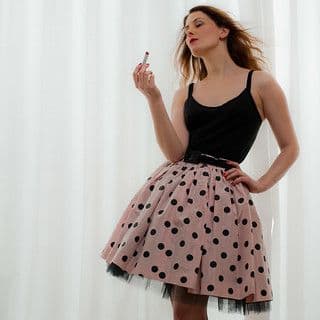
These two skirts speak the same polka-dot language across five decades, but with completely different accents. The contemporary tulle confection channels 1950s sweetness with its crisp black dots scattered across dusty pink like a vintage tea dress gone party-ready, while the 1970s lurex number takes those same spots and transforms them into shimmering sequined constellations against black—disco ball meets Minnie Mouse.