V&A
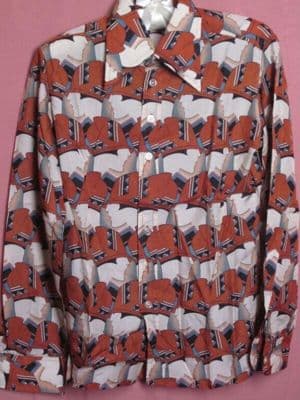
Rust Orange Geometric Print Cotton Shirt
1950s · 1960s · French
Designer
Cazou
Production
ready-to-wear
Material
printed cotton
Culture
French
Movement
Op Art · Atomic Age
Influences
Op Art movement · Bauhaus geometric design
A long-sleeved button-front shirt featuring an all-over geometric print of interlocking cube-like forms in rust orange, white, black, and gray. The pattern creates an optical illusion effect typical of 1960s Space Age design, with three-dimensional geometric shapes that appear to shift and move across the fabric surface. The shirt has a classic collar, front button closure, and appears to be cut in a relaxed, straight silhouette. The print demonstrates the era's fascination with modernist design, architectural forms, and visual experimentation. The cotton fabric provides a casual foundation for this bold graphic pattern that exemplifies mid-1960s French ready-to-wear's embrace of Pop Art and Op Art influences.
shirt/blouseregular fitcollarlesship length
Connected To
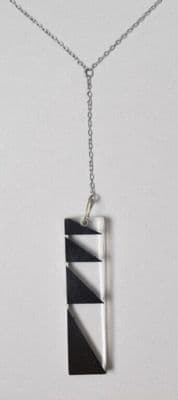
Influences·Bauhaus geometric designInfluences·Op Art movementMovement·Op Art
Echoes Across Time
1950s → 1990s · 50yr62%
SHARED
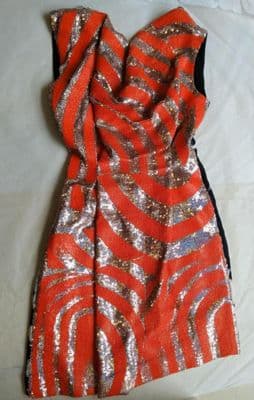
These two pieces reveal how Op Art's visual tricks migrated from gallery walls to closets across five decades. The 1950s shirt deploys interlocking geometric forms in rust and white that create the same retinal buzz as a Vasarely painting, while the 1990s dress translates those optical illusions into sequined curves that shimmer and shift with each movement.
Influences·Op Art movement

1990s → 1950s · 50yr39%
Pull the Thread→
Follow this garment wherever the graph leads