V&A
Orange Silver Sequined Geometric Mini Dress
1990s · 2010s · British
Designer
Louise Gray
Production
ready-to-wear
Material
silk with sequins
Culture
British
Movement
Contemporary British Fashion · Supermodel Era
Influences
Op Art movement · animal print motifs
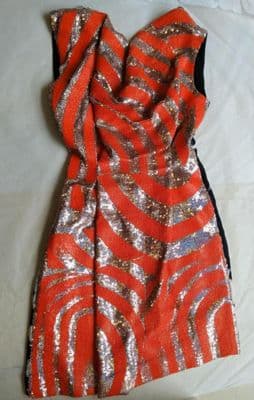
A sleeveless mini dress constructed from silk fabric entirely covered in sequins arranged in bold geometric patterns. The sequins create swirling, zebra-like stripes in orange and silver that curve dynamically across the garment's surface. The dress features a high neckline and appears to have a close-fitting silhouette that follows the body's contours. The sequin application is dense and uniform, creating a highly reflective surface that would catch light dramatically. This piece represents contemporary British fashion's experimental approach to surface decoration and pattern, combining traditional sequin embellishment techniques with bold graphic motifs that reference both animal prints and Op Art movement aesthetics.
dresstight fitround neckmini
Connected To
Influences·Op Art movement
SHARED50 years · cross-culture · cross-category
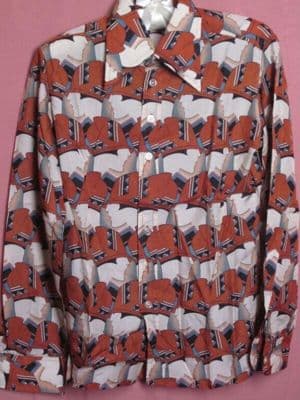
These two pieces reveal how Op Art's visual tricks migrated from gallery walls to closets across five decades. The 1950s shirt deploys interlocking geometric forms in rust and white that create the same retinal buzz as a Vasarely painting, while the 1990s dress translates those optical illusions into sequined curves that shimmer and shift with each movement.
Echoes Across Time
1950s → 1990s · 50yr62%
SHARED
These two pieces reveal how Op Art's visual tricks migrated from gallery walls to closets across five decades. The 1950s shirt deploys interlocking geometric forms in rust and white that create the same retinal buzz as a Vasarely painting, while the 1990s dress translates those optical illusions into sequined curves that shimmer and shift with each movement.
Influences·Op Art movement
1990s → 1960s · 50yr62%
Pull the Thread→
Follow this garment wherever the graph leads