V&A
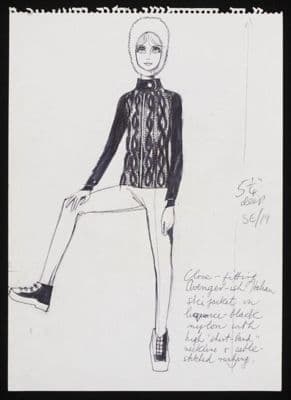
Black White Geometric Patterned Wool Sweater
1970s · 1960s · British
Designer
Veronica Papworth
Production
ready-to-wear
Material
wool knit
Culture
British
Movement
Op Art · Hippie / Counterculture
Influences
Op Art movement · 1960s geometric fashion
A fashion illustration depicts a figure wearing a fitted black sweater featuring bold white geometric diamond or chevron patterns across the torso. The sweater has long sleeves and a high neckline, paired with slim-fitting light-colored trousers and dark shoes. The figure wears what appears to be a close-fitting cap or head covering. The geometric patterning on the sweater reflects the Op Art influence prevalent in 1960s fashion, with sharp contrasting black and white motifs creating visual movement. The overall silhouette is streamlined and modern, characteristic of mid-1960s youth fashion that emphasized clean lines and graphic elements over traditional feminine curves.
sweaterregular fitcrew neckhip length
Connected To
Influences·Op Art movementMovement·Op Art
SHAREDsame era · cross-culture · cross-category
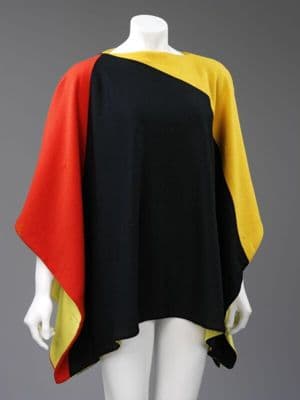
The graphic geometry pulsing across that '70s British sweater and the bold color-blocking of the Italian poncho both spring from Op Art's visual tricks, but they deploy the movement's language in completely different ways.
Echoes Across Time
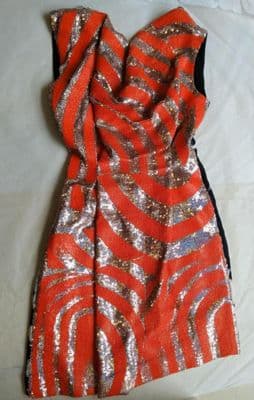
1970s → 1990s · 50yr61%
SHARED
The zigzag lightning bolt that cuts across the 1970s sweater's chest finds its electric echo in the sequined dress's swirling geometric patterns—both garments drunk on Op Art's visual tricks, one rendering them in stark black and white wool, the other in molten orange sequins that catch light like a disco ball.
Influences·Op Art movement

1990s → 1970s · 60yr50%
SHARED
Pull the Thread→
Follow this garment wherever the graph leads