V&A
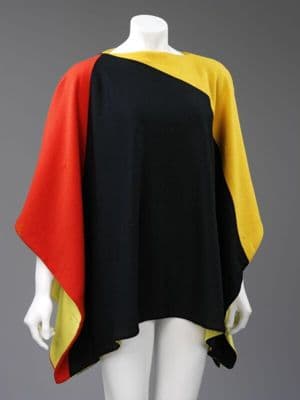
Black Red Yellow Color Block Wool Poncho
1960s · 1960s · Italian
Production
ready-to-wear
Material
wool jersey
Culture
Italian
Movement
Op Art · Space Age
Influences
Op Art movement · geometric modernism
This asymmetrical poncho features bold geometric color blocking in black, red, and yellow wool jersey. The garment drapes loosely from the shoulders with an irregular hemline that creates dynamic movement. The black forms the central body panel, while vibrant red and yellow sections create striking diagonal divisions across the silhouette. The construction appears seamless with clean edges, typical of 1960s modernist design principles. The jersey fabric allows for fluid draping while maintaining structure. This piece exemplifies Space Age fashion's embrace of geometric forms and synthetic-inspired aesthetics, translating Op Art visual concepts into wearable form through bold color contrasts and simplified construction.
capetenthip length
Connected To
Influences·Op Art movementMovement·Op ArtMovement·Space Age
SHAREDsame era · cross-culture · cross-category
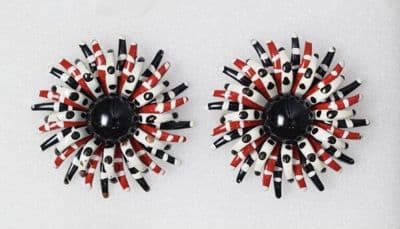
These pieces capture the same 1960s obsession with hard-edged geometry and optical punch, but one explodes outward while the other wraps inward. The earrings' radiating spikes of red, black, and white enamel create the kind of retinal buzz that Op Art painters like Bridget Riley were after—pure visual electricity designed to make your eyes work overtime.
Echoes Across Time
1990s → 1960s · 50yr62%
SHARED
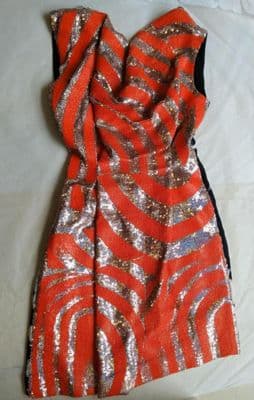
The orange sequined mini and the tricolor poncho are separated by three decades but united by Op Art's seductive visual tricks — one uses metallic sequins to fracture light along zigzag stripes, the other deploys bold color blocking to create the illusion of movement across the body's curves.
Influences·Op Art movement

2010s → 1960s · 60yr46%
SHARED
Pull the Thread→
Follow this garment wherever the graph leads