1960s · 1960s · Western
Production
ready-to-wear
Material
synthetic blend
Culture
Western
Movement
Space Age · Op Art
Influences
mod geometric graphics · op art movement
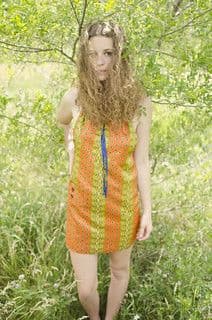
A sleeveless mini dress featuring bold geometric chevron patterns in vibrant orange, yellow, green, and blue synthetic fabric. The garment has a simple A-line silhouette that falls mid-thigh, with a straight neckline and armholes finished with narrow binding. The chevron motifs create dynamic diagonal movement across the surface, typical of Space Age design's embrace of optical effects and synthetic materials. The dress appears to be constructed with minimal seaming, emphasizing the flat, graphic quality of the printed pattern over structural tailoring details.
Follow this garment wherever the graph leads
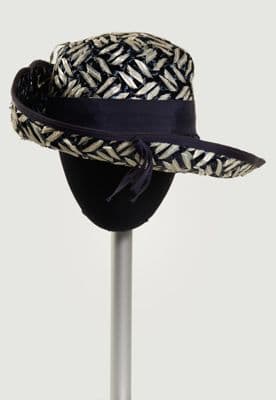
That orange-and-lime chevron mini dress and the navy-and-white zigzag hat are both drunk on the same 1960s optical high — the kind of eye-scrambling geometry that made Op Art the decade's favorite headache. The dress's electric chevrons march down in perfect formation while the hat's broken zigzags wrap around the crown like a fragmented echo, both designed to make your retinas work overtime in that distinctly Space Age way.
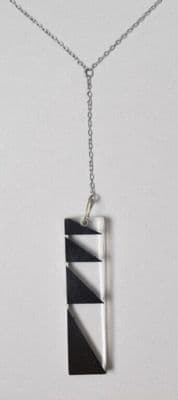
Both pieces pulse with the same Op Art heartbeat that made the 1960s feel like the future had arrived early. The dress's zigzag chevrons in electric citrus tones and the necklace's stark black-and-white geometric squares both emerge from that moment when artists like Bridget Riley were making gallery walls vibrate, and fashion designers seized on screen-printing to translate those optical illusions onto bodies.
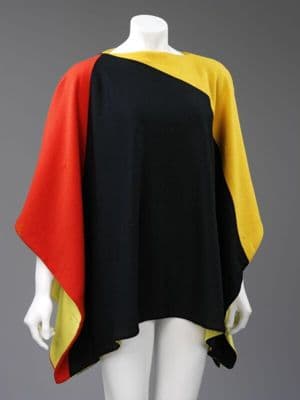
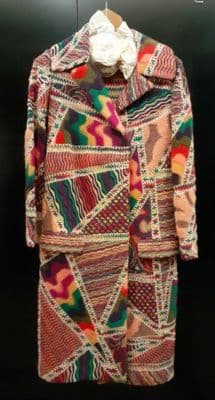
Both pieces pulse with the same 1960s obsession with geometric color that made Op Art gallery darlings and Space Age fashion inevitable. The chevron dress slices citrus brights into sharp Vs that seem to vibrate against each other, while the poncho drapes those same era-defining primaries—red, yellow, black—in bold asymmetrical blocks that would make Mondrian proud.
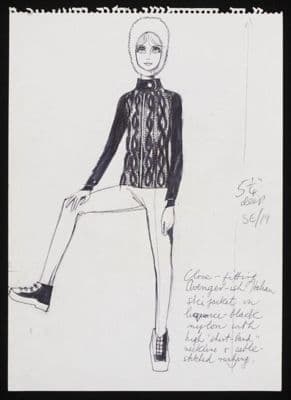
That orange mini dress pulses with the same optical fever dream as the black-and-white sweater sketch, both drunk on the zigzag geometries that made Op Art the defining visual language of the mid-1960s. The dress pushes those chevrons into acidic, psychedelic territory — pure Carnaby Street energy — while the sweater domesticates the same retinal burn into something you could actually wear to work without causing seizures.