SMITHSONIAN
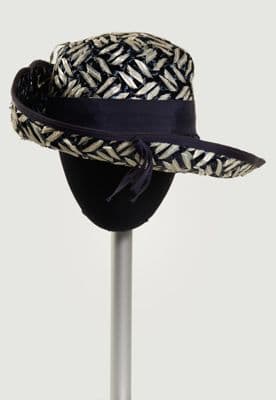
White Navy Plastic Raffia Asymmetrical Brim Hat
1960s · 1960s · American
Production
ready-to-wear
Material
plastic raffia
Culture
American
Movement
Space Age · Op Art
Influences
Op Art geometric patterns · 1960s modernist millinery
A structured hat featuring a fitted crown made from woven plastic raffia in a distinctive chevron or herringbone pattern of white and navy blue. The asymmetrical brim extends longer on one side, creating a modern geometric silhouette characteristic of 1960s millinery design. A navy blue grosgrain ribbon band encircles the crown, tied in a bow at the back. The synthetic raffia material demonstrates the era's embrace of new plastics and man-made fibers, while the bold geometric weave pattern reflects the decade's fascination with Op Art and modernist design principles.
hat
Connected To
Influences·Op Art geometric patternsMovement·Op ArtTechnique·machine-weaving
SHARED10 years · cross-culture · cross-category
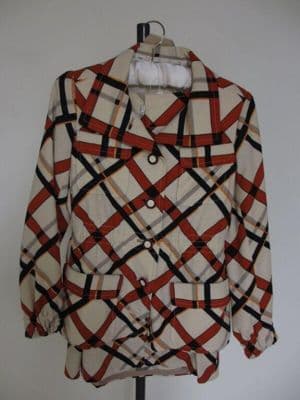
The zigzag basketweave of the 1960s hat and the bold geometric grid of the 1970s blazer both pulse with Op Art's visual trickery, proving that the movement's hypnotic patterns translated from gallery walls to wardrobes with surprising staying power.
Text61%
Image73%
Entity

Movement·Op ArtMovement·Space AgeMotif·chevron-zigzag
SHAREDsame era · cross-culture · cross-category
That orange-and-lime chevron mini dress and the navy-and-white zigzag hat are both drunk on the same 1960s optical high — the kind of eye-scrambling geometry that made Op Art the decade's favorite headache. The dress's electric chevrons march down in perfect formation while the hat's broken zigzags wrap around the crown like a fragmented echo, both designed to make your retinas work overtime in that distinctly Space Age way.
65%
Movement·Op ArtMovement·Space Age
SHAREDsame era · cross-culture · cross-category
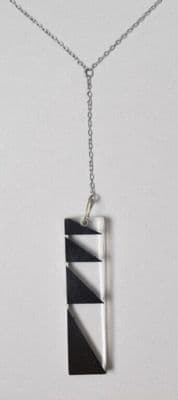
Both pieces pulse with that mid-60s obsession with synthetic materials and optical tricks—the necklace's sharp black-and-white triangular pattern creating the same retinal buzz as the hat's woven chevron weave. The pendant dangles like a modernist dog tag, while the hat's asymmetrical brim cuts across the face with architectural precision, but they're united by that Space Age conviction that plastic could be precious and geometry could be glamorous.
65%
Movement·Op ArtMovement·Space Age
SHAREDsame era · cross-culture · cross-category
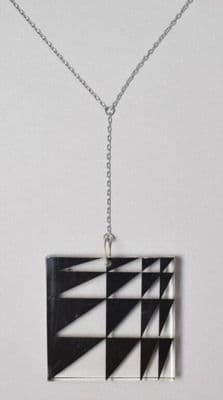
These two pieces capture the 1960s fascination with making the synthetic look sophisticated through bold geometric patterning. The necklace's stark black-and-white triangular grid creates the same optical vibration as the hat's woven chevron pattern, both using high contrast to transform humble materials—acrylic and plastic raffia—into something that reads as luxuriously modern.
Pull the Thread→
Follow this garment wherever the graph leads