V&A
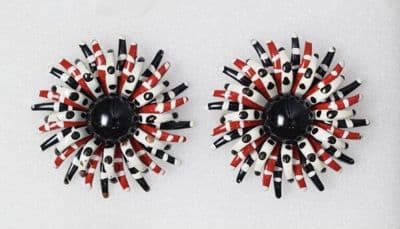
Red Black White Floral Enamel Clip-On Earrings
1960s · 1960s · American
Designer
Coro
Production
mass-produced
Material
metal with enamel
Culture
American
Movement
Op Art · Space Age
Influences
Op Art movement · atomic age sunburst motifs
These are large circular clip-on earrings featuring a radiating sunburst or flower design. Each earring consists of numerous small rectangular segments arranged in concentric circles around a black center. The segments alternate between red, black, and white enamel finishes on a metal base. The geometric pattern creates a bold, graphic effect typical of 1960s costume jewelry. The earrings appear to be substantial in size, likely measuring 2-3 inches in diameter, making them statement pieces. The clip-on mechanism suggests they were designed for universal wear without requiring pierced ears, which was common for costume jewelry of this era.
glasses
Connected To
Influences·Op Art movementMovement·Op ArtMovement·Space Age
SHAREDsame era · cross-culture · cross-category
These pieces capture the same 1960s obsession with hard-edged geometry and optical punch, but one explodes outward while the other wraps inward. The earrings' radiating spikes of red, black, and white enamel create the kind of retinal buzz that Op Art painters like Bridget Riley were after—pure visual electricity designed to make your eyes work overtime.
77%
Influences·Op Art movementMovement·Op ArtMovement·Space Age
SHAREDsame era · cross-culture · cross-category
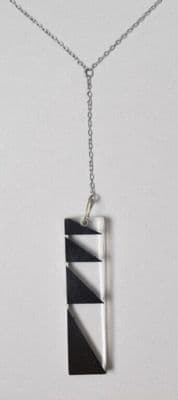
These pieces capture the exact moment when Op Art crashed into jewelry design, turning necks and earlobes into galleries for geometric rebellion. The pendant's razor-sharp triangular facets create the same visual vibration as the earrings' radiating spokes—both using high-contrast patterns to make the eye work overtime, whether through perspex's space-age shimmer or enamel's bold color blocking.
77%
Influences·Op Art movementMovement·Op ArtMovement·Space Age
SHAREDsame era · cross-culture · cross-category
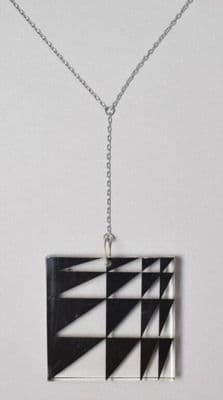
Both pieces pulse with the same Op Art heartbeat that made the 1960s dizzy—the necklace's sharp black-and-white triangular grid creates the same retinal buzz as the earrings' radiating spokes of red, black, and white enamel. The pendant plays it cooler with geometric restraint, while the earrings explode into starburst exuberance, but they're both chasing that same visual high: making your eyes work overtime.
Influences·Op Art movementMovement·Op Art
SHAREDsame era · cross-culture · cross-category
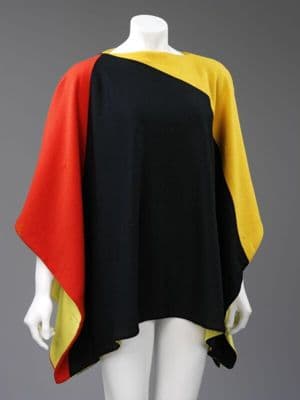
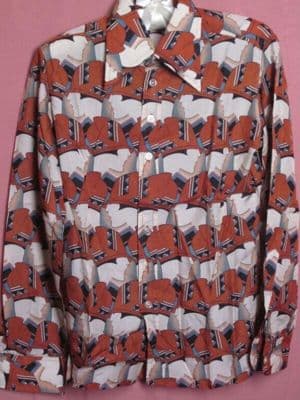
Both pieces pulse with the same optical fever that gripped mid-century design, translating Op Art's retinal assault into wearable form. The shirt's interlocking geometric pattern creates the same visual vibration as the earrings' radiating spokes—both use high contrast and repetitive elements to make static surfaces appear to move and breathe.

Pull the Thread→
Follow this garment wherever the graph leads