FASHIONPEDIA
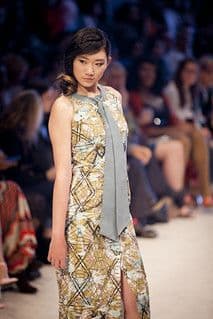
Gold Silver Black Geometric Silk Shift Dress
2010s · 2020s · Western
Production
ready-to-wear
Material
silk
Culture
Western
Movement
Space Age · Modernism · Gorpcore
Influences
modernist architecture · Op Art movement
A sleeveless shift dress with a straight, columnar silhouette that falls to mid-calf length. The garment features an intricate geometric pattern of interlocking angular shapes in metallic gold and silver tones against darker sections. The neckline is a simple round cut, and the dress appears to be constructed without darts or fitted seaming, creating the characteristic boxy silhouette of 1960s Space Age fashion. The silk fabric has a lustrous finish that catches light, emphasizing the geometric motifs. The dress represents the era's fascination with modernist design and futuristic aesthetics, translating architectural and technological influences into wearable form through bold graphic patterning.
dressstraighthalter neckmidi
Connected To
Influences·modernist architectureMovement·ModernismMovement·Space Age
Echoes Across Time
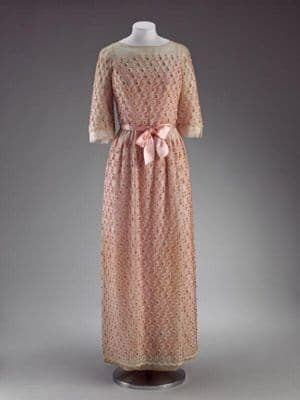
2010s → 1950s · 60yr79%
SHARED
Both dresses speak the language of geometric modernism, but from different decades of its evolution. The 1950s organdie gown whispers its modernist credentials through delicate machine-woven honeycomb patterns that catch light like architectural latticework, while the 2010s silk shift shouts them in bold metallic geometric prints that could have been lifted from a Mondrian grid.
Influences·modernist architectureMovement·ModernismMovement·Space Age
Pull the Thread→
Follow this garment wherever the graph leads