1950s · 1960s · British
Production
ready-to-wear
Material
organdie
Culture
British
Movement
Space Age · Modernism · New Look / Post-War
Influences
modernist architecture · space age minimalism
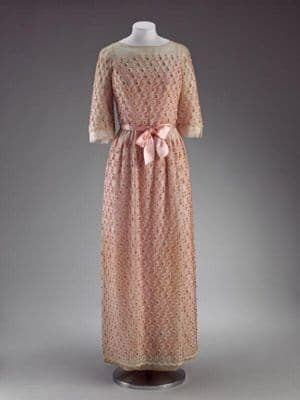
A floor-length evening dress in pale pink organdie featuring an allover geometric honeycomb or diamond lattice pattern. The garment displays a simple, modernist silhouette with a straight column shape that skims the body without fitted waistline emphasis. Three-quarter length sleeves extend to mid-forearm, maintaining the dress's clean architectural lines. A narrow self-fabric belt ties at the natural waist, creating subtle definition while preserving the minimalist aesthetic. The sheer organdie fabric creates dimensional texture through its crisp, structured weave and geometric openwork pattern. The dress exemplifies 1960s Space Age design principles with its emphasis on geometric forms, technological-inspired surface treatments, and rejection of traditional feminine curves in favor of futuristic simplicity.
Follow this garment wherever the graph leads
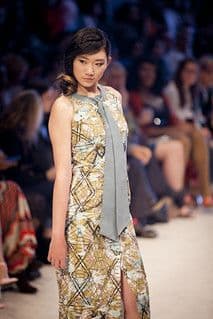
Both dresses speak the language of geometric modernism, but from different decades of its evolution. The 1950s organdie gown whispers its modernist credentials through delicate machine-woven honeycomb patterns that catch light like architectural latticework, while the 2010s silk shift shouts them in bold metallic geometric prints that could have been lifted from a Mondrian grid.
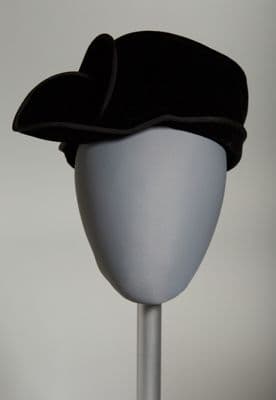
That black velvet pillbox, with its sculptural bow that reads more like an abstract geometric form than feminine frippery, shares DNA with the pink organdie's architectural restraint — both garments strip away Victorian fuss in favor of clean, modernist lines. The hat's interlocking panels create the same kind of spatial puzzle as the dress's precisely engineered bodice, where geometric eyelet patterns replace traditional embellishment.
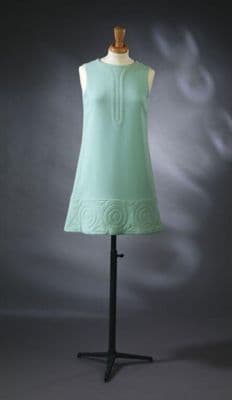
The pale pink organdie gown with its delicate eyelet embroidery and the mint green crêpe mini with its bold circular appliqués are separated by barely a decade, yet they chart fashion's dramatic pivot from ladylike restraint to youthful rebellion.
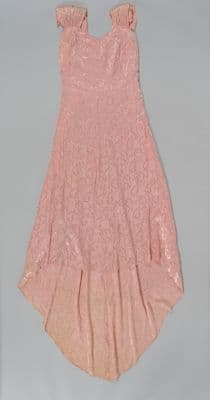
Both dresses speak the same 1950s language of romantic femininity, but with different accents. The first dress's handkerchief hem and damask's metallic shimmer reads pure American glamour—all about the dramatic entrance and the swish across a dance floor. The second dress, with its demure organdie and restrained A-line, whispers British propriety even as it follows the New Look's blueprint of nipped waist and full skirt.