V&A
Mint Green Crêpe A-Line Mini Dress
1960s · 1960s · French
Designer
Pierre Cardin
Production
ready-to-wear
Material
crêpe
Culture
French
Movement
Space Age · Modernism
Influences
1960s geometric modernism · Space Age futurism
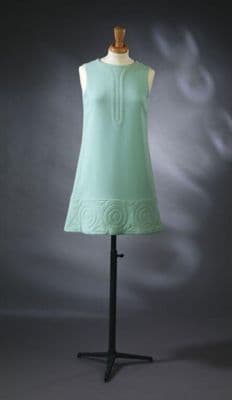
This sleeveless A-line mini dress exemplifies Pierre Cardin's geometric modernist approach to 1960s fashion. The garment features a clean, architectural silhouette that falls straight from the shoulders to mid-thigh length. The mint green crêpe fabric provides structure while maintaining fluidity. A distinctive vertical zipper runs down the center front, serving both functional and decorative purposes as a bold linear element. The hemline is adorned with circular spiral motifs that appear to be cut-out or applied decorative elements, creating textural interest at the dress's terminus. The sleeveless design with simple armholes emphasizes the garment's minimalist construction, while the overall form reflects the Space Age movement's fascination with futuristic, unadorned shapes that prioritized geometric purity over traditional feminine curves.
dressa-lineround neckmini
Connected To
Influences·1960s geometric modernismMovement·Space Age
SHAREDsame era · cross-culture
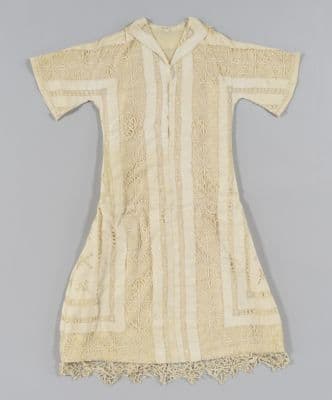
These two dresses capture the 1960s' twin obsessions with geometric purity and surface texture, but through opposite means. The mint green dress achieves its modernist edge through sculptural simplicity—that crisp A-line silhouette punctuated by concentric circle appliqués that read like Op Art targets, while the cream dress builds complexity through intricate lace panels that create their own geometric grid.
Pull the Thread→
Follow this garment wherever the graph leads