SMITHSONIAN
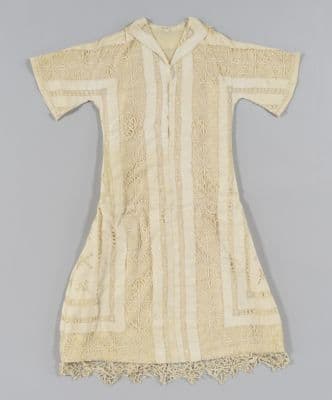
Cream Lace Shift Dress with Peach Undertones
1960s · 1960s · American
Designer
Arthur McGee
Production
ready-to-wear
Material
synthetic lace
Culture
American
Movement
Space Age fashion · Space Age
Influences
1960s geometric modernism · synthetic textile innovation
A knee-length shift dress constructed from cream-colored synthetic lace with pale peach undertones. The garment features a straight, columnar silhouette characteristic of 1960s modernist design, with short sleeves and a simple round neckline. Vertical bands of varying lace patterns create structured panels down the front and sides, emphasizing the geometric aesthetic of the Space Age era. The hem is finished with a scalloped lace border. The synthetic lace construction demonstrates the period's embrace of new materials and manufacturing techniques, while the clean lines and minimal ornamentation reflect the decade's move away from traditional feminine silhouettes toward architectural, youth-oriented fashion.
dressstraightv-neckabove-the-knee
Connected To
Influences·1960s geometric modernismMovement·Space Age
SHAREDsame era · cross-culture
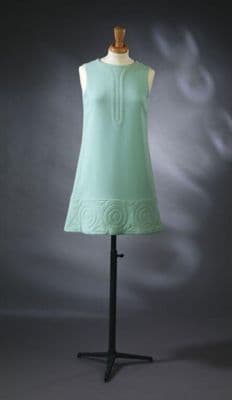
These two dresses capture the 1960s' twin obsessions with geometric purity and surface texture, but through opposite means. The mint green dress achieves its modernist edge through sculptural simplicity—that crisp A-line silhouette punctuated by concentric circle appliqués that read like Op Art targets, while the cream dress builds complexity through intricate lace panels that create their own geometric grid.
Pull the Thread→
Follow this garment wherever the graph leads