V&A
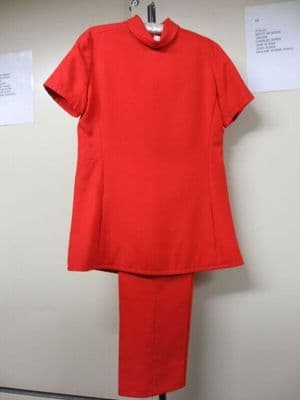
Bright Red Slubbed Linen Trouser Suit
1960s · 1960s · French
Designer
Hubert de Givenchy
Production
ready-to-wear
Material
slubbed linen
Culture
French
Movement
Space Age fashion · Space Age
Influences
1960s geometric minimalism · Parisian ready-to-wear
A vibrant red trouser suit featuring a short-sleeved tunic top with a simple round neckline and straight-cut trousers. The garment is constructed from slubbed linen, giving it a textured surface with natural irregularities characteristic of the weave. The tunic falls to mid-thigh length with a boxy, unstructured silhouette that moves away from the fitted waistlines of previous decades. The trousers appear to have a straight leg cut without visible pleats or darts. This ensemble exemplifies the 1960s shift toward simplified, geometric forms and the growing acceptance of pantsuits for women, reflecting the era's embrace of youth culture and practical modernism in fashion.
jumpsuitstraightround neckhip length
Connected To
Influences·1960s geometric minimalismMovement·Space AgeTechnique·machine-weaving
Pull the Thread→
Follow this garment wherever the graph leads