SMITHSONIAN
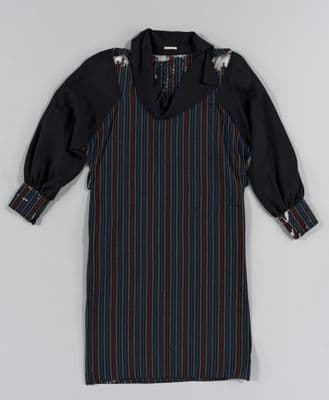
Black Burgundy Blue Striped Wool Shift Dress
1960s · 1960s · American
Production
ready-to-wear
Material
wool crepe
Culture
American
Movement
Space Age · Mod
Influences
1960s geometric minimalism · mod shift dress silhouette
A knee-length shift dress featuring a distinctive cowl collar that drapes softly at the neckline. The garment displays vertical pinstripes in blue and burgundy against a black ground, creating a subtle geometric pattern typical of 1960s design sensibilities. The dress has long sleeves with fitted cuffs and maintains the characteristic straight, unwaisted silhouette of Space Age fashion. The wool crepe fabric appears to have a smooth, structured drape that holds the geometric lines cleanly. The cowl collar adds visual interest and softness to an otherwise architectural form, reflecting the era's balance between futuristic minimalism and feminine details.
dressstraightcowl neckknee length
Connected To
Influences·1960s geometric minimalismMovement·Space AgeTechnique·machine-weaving

Pull the Thread→
Follow this garment wherever the graph leads