V&A
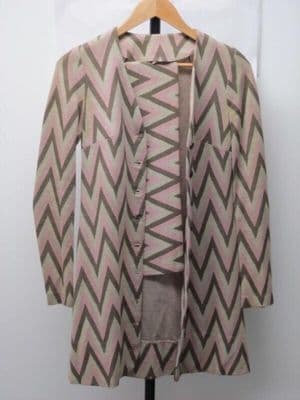
Pink Brown Cream Chevron Mini Dress with Scarf
1970s · 1960s · British
Designer
Biba
Production
ready-to-wear
Material
synthetic blend
Culture
British
Movement
Mod · Hippie / Counterculture
Influences
Op Art movement · mod geometric styling
A straight-cut mini dress featuring an all-over chevron zigzag pattern in pink, brown, and cream. The dress has a simple shift silhouette with long sleeves and appears to fall mid-thigh. The geometric pattern creates a bold optical effect typical of 1960s mod fashion. A matching scarf with the same chevron pattern is styled around the neck, creating a coordinated ensemble. The synthetic fabric appears to have a smooth, possibly jersey-like texture that would drape softly on the body. The construction is minimal and unstructured, reflecting the decade's move away from fitted, corseted silhouettes toward youth-oriented, geometric designs that emphasized graphic impact over traditional tailoring.
dressstraightv-neckabove-the-knee
Connected To
Influences·Op Art movement
SHAREDsame era · cross-culture · cross-category
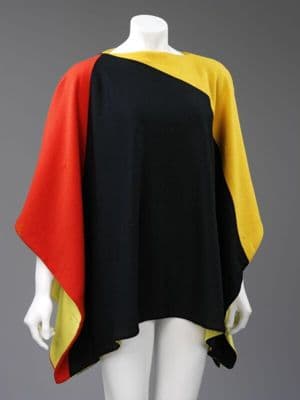
Both pieces pulse with the hypnotic energy of Op Art, but they translate the movement's visual tricks through completely different vocabularies. The chevron dress deploys zigzag geometry like a fever dream, its sharp angles creating the kind of retinal buzz that Bridget Riley perfected on canvas, while the poncho takes Op Art's bold color-blocking and wraps it around the body like a wearable Mondrian.
Echoes Across Time
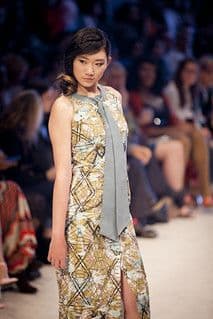
2010s → 1970s · 60yr60%
SHARED
These two dresses trace a direct line from Op Art's hypnotic geometry, but with forty years of evolution between them. The 1970s mini dress deploys chevrons like visual artillery — those sharp zigzags creating the retinal buzz that Bridget Riley perfected in galleries, now translated into wearable form with the era's typical brazenness.
Influences·Op Art movement
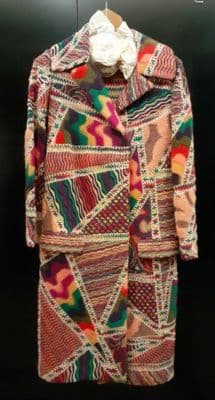
1970s → 1970s · 40yr49%
SHARED
Pull the Thread→
Follow this garment wherever the graph leads