V&A
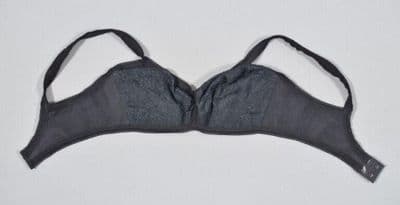
Black Lace Structured Underwire Brassiere
1950s · 1950s · British
Designer
Rigby & Peller
Production
ready-to-wear
Material
lace and elastic
Culture
British
Movement
New Look · New Look / Post-War
Influences
1950s bullet bra silhouette · New Look foundation requirements
A structured brassiere featuring the characteristic conical cup shape of 1950s undergarments. The cups are constructed from dark lace with visible seaming that creates the pointed silhouette typical of the era's bullet bra aesthetic. Thin elastic straps connect to the cups, and the construction shows evidence of underwire support. The lace appears to be a geometric or floral pattern worked in dark thread. The overall engineering reflects the period's emphasis on creating a pronounced bust line that would support the fashionable silhouettes of fitted bodices and full skirts. Made by Rigby & Peller, a London corsetiere, this represents the transition from wartime utility undergarments to more structured foundation wear.
Connected To
Movement·New LookMovement·New Look / Post-WarWorn with·girdle
SHAREDsame era · cross-culture · cross-category
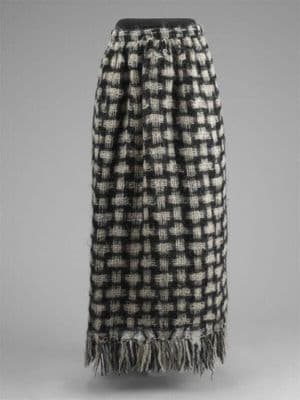
Both pieces speak the same post-war language of structured femininity, but through radically different vocabularies. The mohair skirt's bold houndstooth check and that dramatic fringe hem announce themselves with confidence, while the bra works in whispers—its delicate lace overlay and precise underwire engineering designed to be felt but never seen.
Text51%
Image70%

Movement·New LookMovement·New Look / Post-War
SHAREDsame era · cross-culture · cross-category
These two pieces reveal the hidden architecture of 1950s femininity: the yellow dress's smooth, conical bodice and nipped waist exist because of the engineering happening underneath in that black longline bra. The bra's rigid cups and extended torso coverage literally sculpted the New Look silhouette that Dior made famous, while the dress represents the public face of that private construction—all that complex structural work rendered invisible beneath sunny cotton optimism.
Movement·New LookMovement·New Look / Post-War
SHARED10 years · cross-culture · cross-category
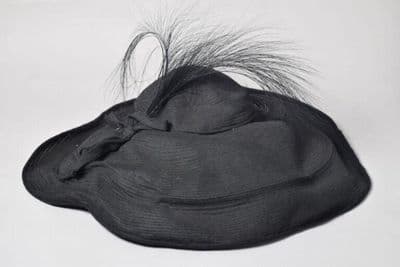
Both pieces speak the same sculptural language of the 1950s New Look, where structure was everything and the female form was architecture to be engineered. The hat's dramatic buckram shell curves echo the precise underwire arcs of the brassiere — both use hidden frameworks to create impossible, gravity-defying silhouettes that transformed women into living sculptures.
Movement·New LookMovement·New Look / Post-War
SHAREDsame era · cross-culture · cross-category
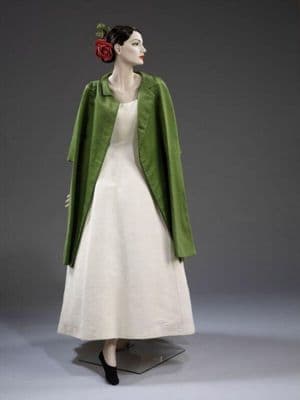
The 1950s evening gown's precisely engineered bodice and the structured bra beneath reveal the decade's obsession with architectural undergarments that could sculpt the female form into Dior's New Look silhouette. Both pieces share that telltale cone-shaped bust construction—the bra's pointed cups literally building the foundation that the gown's fitted bodice then celebrates and displays.

Pull the Thread→
Follow this garment wherever the graph leads