SMITHSONIAN
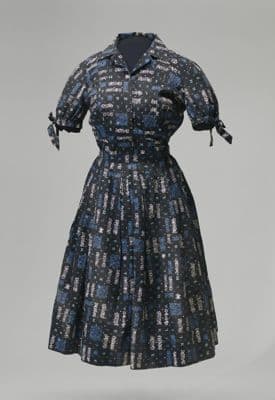
Navy Cotton Shirt Dress with Geometric Print
1950s · 1950s · American
Production
ready-to-wear
Material
cotton
Culture
American
Movement
New Look / Post-War
Influences
1950s shirtwaist dress · atomic age geometric prints
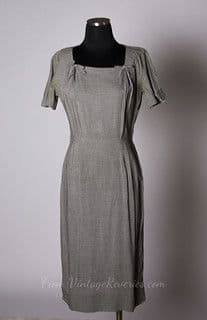
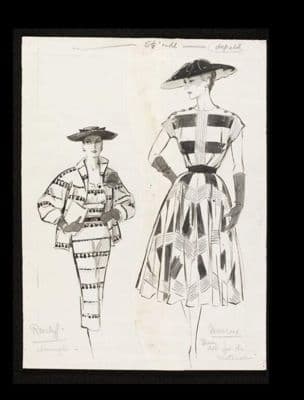
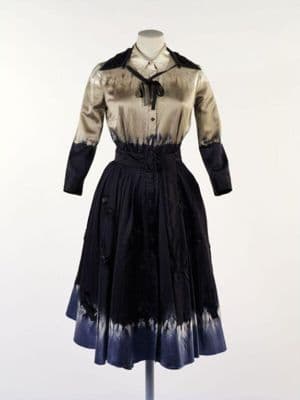
A mid-1950s cotton day dress featuring a dark navy base with an all-over geometric print in white and light blue. The dress has a classic shirt-style collar, short sleeves gathered at the cuffs with small ties, and a fitted bodice that buttons down the front. A matching fabric belt cinches the natural waist, creating the characteristic silhouette of the era. The skirt extends to mid-calf length with moderate fullness typical of 1950s casual wear. The geometric print appears to be small rectangular or brick-like motifs scattered across the fabric, reflecting the atomic age fascination with modern, abstract patterns that moved away from traditional florals.
dressfit and flareround neckbelow the knee
Connected To
Influences·1950s shirtwaist dress
SHARED70 years · cross-culture
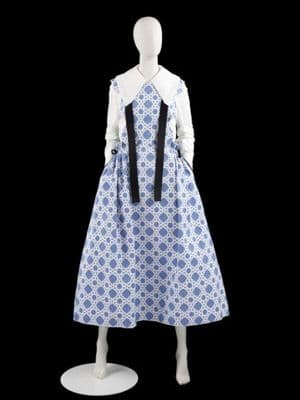
The 1950s dress with its geometric print and crisp tie sleeves speaks the same structural language as the contemporary pale pink shirtdress, but where the vintage piece revels in pattern and detail—those precise bows, the busy print that demands attention—the modern version strips everything down to pure line.
Echoes Across Time

1950s → 2020s · 70yr67%
SHARED
The 1950s dress with its geometric print and crisp tie sleeves speaks the same structural language as the contemporary pale pink shirtdress, but where the vintage piece revels in pattern and detail—those precise bows, the busy print that demands attention—the modern version strips everything down to pure line.
Influences·1950s shirtwaist dress
1950s → 2020s · 70yr45%
LINEAGE
Pull the Thread→
Follow this garment wherever the graph leads