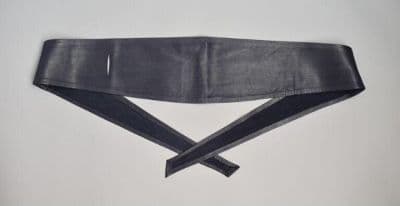
These two Yamamoto pieces show how the designer's deconstructed tailoring evolved from militant precision to monastic simplicity within the same decade. The trench coat dissects classic outerwear into angular fragments—notice how the belt cuts across asymmetrical panels and pockets jut out like architectural details—while the hooded coat abandons all that structural aggression for something more primal: a black wool envelope that swallows the body whole.