V&A
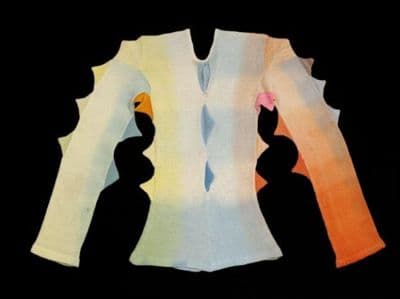
Cream Wool Sweater with Animal Print Graphics
1970s · 1970s · British
Production
ready-to-wear
Material
machine-knitted wool
Culture
British
Movement
Pop Art · Hippie / Counterculture
Influences
Pop Art imagery · 1970s graphic design
A machine-knitted wool sweater featuring a striking graphic design that creates silhouettes of two figures facing each other in profile. The garment displays a gradient color scheme transitioning from cream through yellow to orange and pink tones. The design appears to be intarsia knitting, creating the pictorial motifs as integral parts of the fabric structure rather than applied decoration. The sweater shows a close-fitting silhouette typical of 1970s knitwear, with what appears to be a crew neckline. The graphic treatment reflects the era's interest in bold, artistic imagery on clothing, moving beyond traditional patterns to incorporate figurative and conceptual designs that blur the line between fashion and wearable art.
sweaterregular fitcrew neckhip length
Connected To
Movement·Hippie / CountercultureMovement·Pop Art
SHARED10 years · cross-culture · cross-category
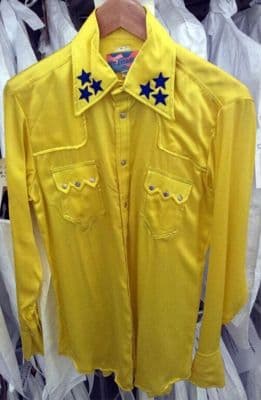
Both pieces pulse with that unmistakable 1970s urge to turn clothing into billboards for personal expression, but they take wildly different routes to get there. The cream sweater deploys those bold animal silhouettes like graphic punch lines—pure Pop Art cheek translated into knitwear—while the yellow satin Western shirt goes full rhinestone cowboy with its star-spangled collar, turning frontier nostalgia into disco-ready armor.
Pull the Thread→
Follow this garment wherever the graph leads