V&A
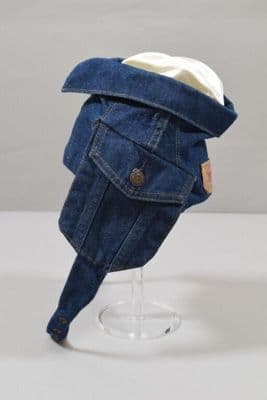
Indigo Denim Sculptural Aviator Hat
1980s · 1980s · British
Production
one-of-a-kind
Material
denim
Culture
British
Movement
Deconstructivism · New Romanticism
Influences
workwear deconstruction · architectural millinery
This sculptural hat demonstrates radical deconstruction of denim garment elements, transforming traditional workwear fabric into high fashion millinery. The piece features multiple denim panels arranged in angular, geometric segments that create a complex three-dimensional form. Traditional denim construction details like topstitching and pocket elements are visible, repurposed as decorative features rather than functional components. The indigo blue denim contrasts with cream-colored satin lining visible at the interior. The overall silhouette is dramatically oversized and architectural, extending well beyond natural head proportions. This represents the experimental approach to materials and form characteristic of 1980s avant-garde fashion, where designers challenged conventional boundaries between different garment categories and elevated humble materials through innovative construction techniques.
hat
Connected To
Movement·DeconstructivismFunction·avant-garde
SHARED20 years · cross-culture · cross-category
That denim aviator cap reads like early Watanabe or Kawakubo—taking workwear's most prosaic material and torquing it into something between armor and origami, complete with those flapped ear guards that suggest both function and pure sculptural whimsy.

Pull the Thread→
Follow this garment wherever the graph leads