Deconstructivism · 2010s · Italian
Designer
Rick Owens
Production
ready-to-wear
Material
black cotton
Culture
Italian
Movement
Deconstructivism
Influences
Japanese avant-garde tailoring · deconstructionist fashion
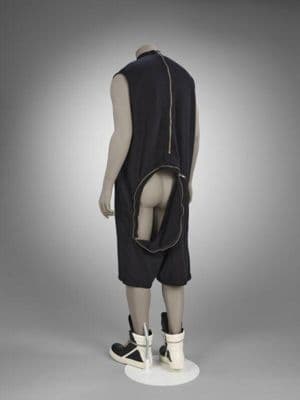
This Rick Owens body-bag suit features a sleeveless black cotton construction with an dramatically oversized, draped silhouette that extends to mid-calf length. The most striking element is the large circular cutout at the back, creating an opening that reveals the wearer's torso. Multiple silver zippers are integrated throughout the design as both functional and decorative elements. The garment appears to be constructed from a substantial cotton fabric that holds its sculptural shape while draping heavily from the shoulders. The front maintains a more conventional vest-like appearance while the back transforms into an architectural statement piece. This exemplifies Owens' signature approach to deconstructed tailoring and body-conscious design that challenges traditional garment boundaries.
Follow this garment wherever the graph leads
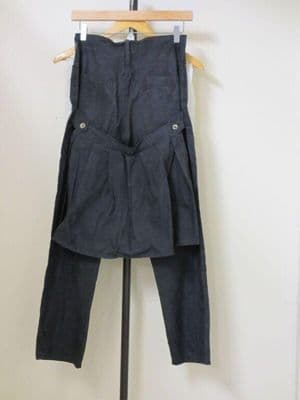
These two pieces trace the evolution of deconstructivist fashion's obsession with turning the body into a site of architectural experiment. The earlier trousers with their detachable apron-like flap and utilitarian snaps suggest a kind of industrial pragmatism—clothing as modular system—while the later draped bodysuit with its strategic cutouts and zip closures pushes that same logic toward something more theatrical and body-conscious.
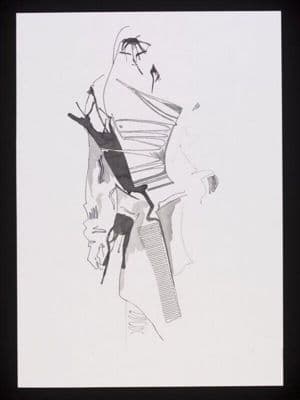
The sketch's angular geometry and the Italian suit's radical cutouts both spring from the same deconstructivist impulse that exploded fashion's basic assumptions in the 2000s — one reimagining the jacket as pure architectural form, the other literally carving negative space into the body's silhouette.
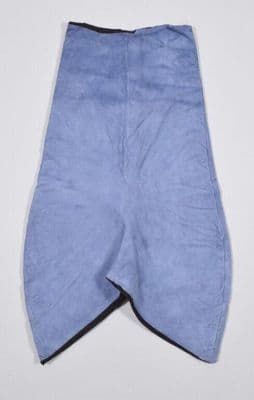
These two pieces trace a direct line through fashion's deconstruction movement, from the soft anarchism of early 1990s British experimentalism to the harder-edged Italian interpretation that followed. The periwinkle hood-collar piece speaks in whispers—its gentle draping and pale jersey suggesting a body seeking shelter, while the black zippered suit shouts with its aggressive cutouts and bondage-inspired hardware that turns the torso into a kind of wearable architecture.
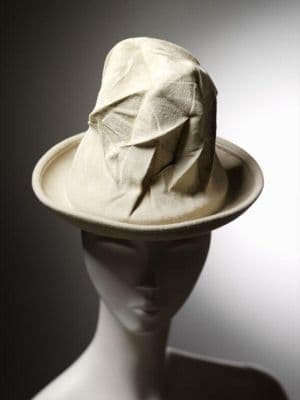
The cream trilby's collapsed crown and deliberately rumpled brim speak the same deconstructionist language as the black suit's strategic cutouts and exposed zippers—both garments reject the very idea of "proper" form. Where the hat appears to have surrendered to gravity, crumpling into soft, sculptural folds, the suit uses harsh geometric voids and industrial hardware to achieve a similar dismantling of conventional silhouettes.