V&A
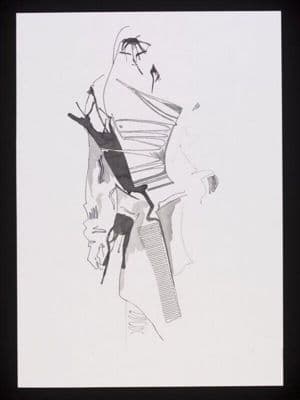
Black and White Geometric Avant-Garde Structured Jacket
2000s · 2010s · British
Designer
Gareth Pugh
Production
haute couture
Material
pen and ink with watercolor on Bristol paper
Culture
British
Movement
Deconstructivism · Indie Sleaze
Influences
deconstructivist architecture · Japanese avant-garde tailoring
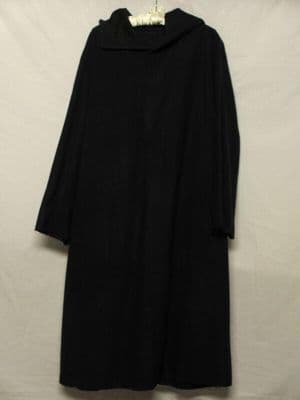
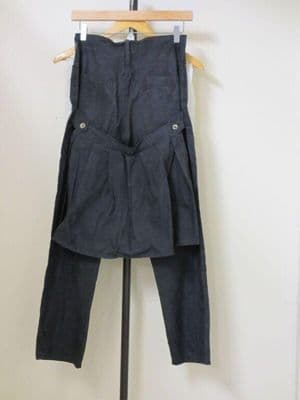
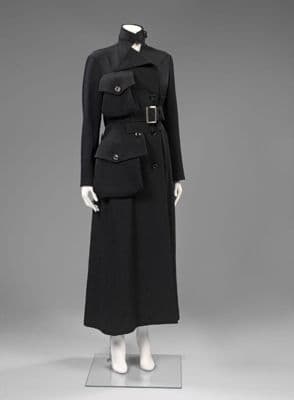
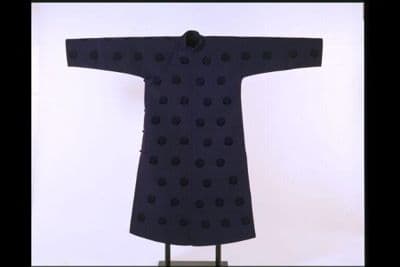
This fashion illustration depicts an avant-garde jacket with sharp geometric construction featuring angular panels and structural elements that extend beyond the natural body silhouette. The garment appears to have contrasting black and white sections with linear detailing, creating a fragmented, architectural aesthetic. The illustration style uses bold pen strokes and watercolor washes to emphasize the garment's dramatic proportions and angular cuts. The jacket's construction suggests heavy interfacing or structured panels that create geometric shapes extending from the torso, characteristic of Gareth Pugh's deconstructed approach to tailoring during this period.
dressoversizedmidi
Connected To
74%
Influences·Japanese avant-garde tailoringMovement·Deconstructivism
SHAREDsame era · cross-culture · cross-category
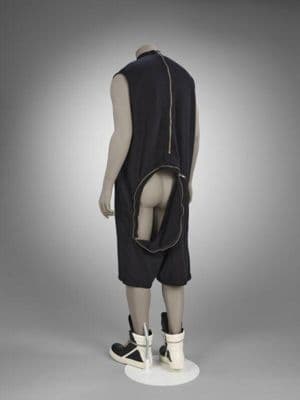
The sketch's angular geometry and the Italian suit's radical cutouts both spring from the same deconstructivist impulse that exploded fashion's basic assumptions in the 2000s — one reimagining the jacket as pure architectural form, the other literally carving negative space into the body's silhouette.
Pull the Thread→
Follow this garment wherever the graph leads