Deconstructivism · 1980s · British
Designer
Body Map
Production
ready-to-wear
Material
cotton with polyurethane coating
Culture
British
Movement
New Romanticism · Deconstructionism
Influences
deconstructionist fashion · Japanese avant-garde tailoring
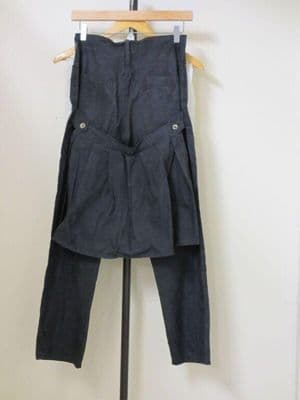
These experimental trousers feature a distinctive modular construction with a detachable rear flap or apron element that hangs from the waistband. The garments are crafted from cotton treated with polyurethane coating, giving them a slightly stiff, technical appearance. The trousers have a high-waisted cut with what appears to be button or snap closures at the waist. The detachable bum flap creates an asymmetrical silhouette and demonstrates the deconstructionist approach typical of 1980s avant-garde fashion. The dark charcoal coloring and industrial coating reflect the era's fascination with synthetic materials and unconventional garment construction methods.
Follow this garment wherever the graph leads

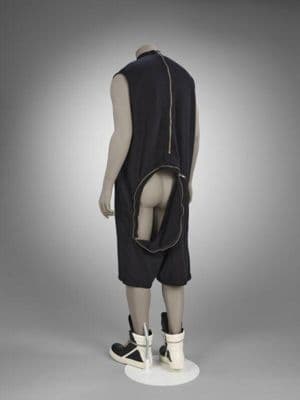
These two pieces trace the evolution of deconstructivist fashion's obsession with turning the body into a site of architectural experiment. The earlier trousers with their detachable apron-like flap and utilitarian snaps suggest a kind of industrial pragmatism—clothing as modular system—while the later draped bodysuit with its strategic cutouts and zip closures pushes that same logic toward something more theatrical and body-conscious.
These pieces speak the same radical language of fashion deconstruction, where traditional garment boundaries dissolve into something more complex and confrontational. The boots' aggressive strapping system and asymmetrical closure echo the trousers' detachable apron-like flap and multiple buckle points—both designers treating functional elements as sculptural interventions that question how we expect clothes to behave.
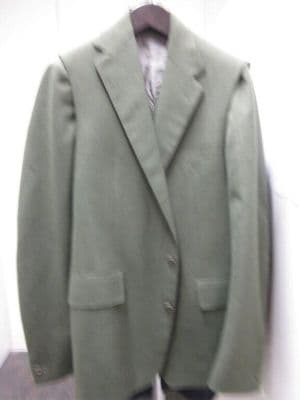
These two pieces speak the same deconstructionist language across three decades, both dismantling conventional tailoring to expose the bones of construction. The British trousers strip away pretense with their utilitarian coating and that dangling apron-like flap—a piece of the garment's anatomy made suddenly visible and strange—while the Austrian jacket performs a similar autopsy on suiting, turning itself inside-out to reveal darts, seams, and structural elements as decorative features.
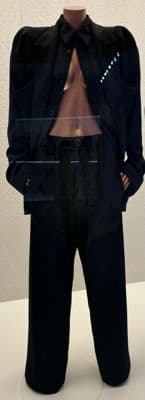
The horned shoulders of that black blazer and the detachable apron-flap on those trousers both spring from the same deconstructive impulse that hit London in the '80s — the idea that a garment's architecture should be visible, even aggressive.