V&A
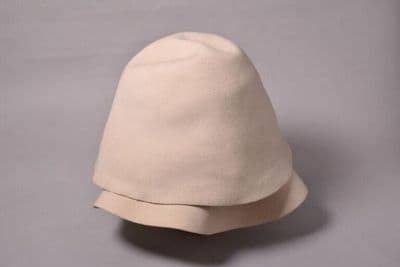
Cream Wool Felt Sculptural Double Hood Hat
1990s · 1970s · British
Designer
Mona Horley
Production
artisan-craft
Material
wool felt
Culture
British
Movement
Conceptual Fashion · Minimalism
Influences
modernist sculpture · architectural forms
This sculptural hat consists of two separate felt hood forms stacked and positioned to create an abstract, architectural silhouette. The upper hood appears dome-shaped with a smooth, rounded crown, while the lower element forms a contrasting angular brim or base. Both pieces are crafted from thick, stiff wool felt in a natural cream tone, showing the material's capacity for holding precise molded shapes. The construction demonstrates advanced millinery techniques, with each hood individually blocked and shaped before assembly. The overall form challenges traditional hat conventions, creating a modernist sculpture that sits on the head. This experimental approach reflects 1970s conceptual fashion design, where accessories became vehicles for artistic expression rather than purely functional headwear.
hatbell
Connected To
Movement·Conceptual FashionFunction·avant-garde
SHARED50 years · cross-category
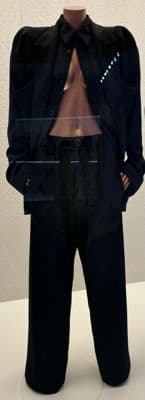
These pieces share the radical geometry of British conceptual fashion, where clothing becomes architecture for the body. The blazer's aggressive shoulder horns and the hat's double-layered dome both reject the human form's natural curves, instead imposing sculptural volumes that extend into space like minimalist monuments.
Pull the Thread→
Follow this garment wherever the graph leads