V&A
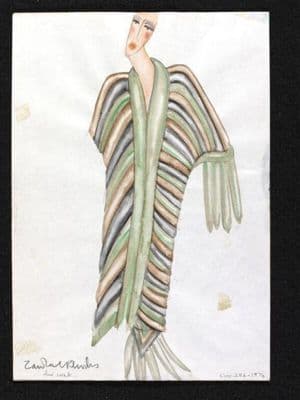
Oversized Sage Green Fur Cape Coat
1970s · 1970s · British
Designer
Zandra Rhodes
Production
haute couture
Material
fur
Culture
British
Movement
Glam Rock · Hippie / Counterculture
Influences
1970s cape coats · Art Deco geometric patterns
This fashion illustration depicts a dramatic oversized fur coat with an extremely wide, cape-like silhouette that extends far beyond the body's natural proportions. The coat features bold diagonal striping in muted earth tones of sage green, brown, cream, and black that create dynamic visual movement across the voluminous form. The garment appears to have wide, flowing sleeves that merge seamlessly with the body of the coat, creating an almost tent-like structure. The striped pattern follows the coat's construction lines, emphasizing its architectural quality. The illustration style is characteristic of 1970s fashion design sketches, with loose, expressive linework and watercolor washes that capture the luxurious texture and movement of the fur material.
coatoversizedcollarlessmaxi
Connected To
Influences·Art Deco geometric patterns
SHARED50 years · cross-culture · cross-category
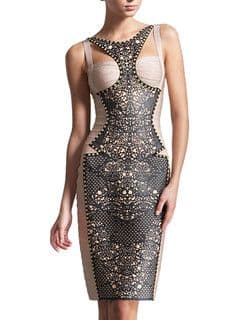
That silver mesh dress carries the same geometric DNA as the striped fur coat's bold diagonal bands, both channeling Art Deco's obsession with linear rhythm and visual movement. The beaded dress translates those 1920s zigzag motifs into metallic chainmail that catches light like a disco ball, while the coat takes the same angular energy and scales it up into sweeping fur stripes that turn the wearer into a walking architectural statement.
Echoes Across Time

2010s → 1970s · 50yr60%
SHARED
That silver mesh dress carries the same geometric DNA as the striped fur coat's bold diagonal bands, both channeling Art Deco's obsession with linear rhythm and visual movement. The beaded dress translates those 1920s zigzag motifs into metallic chainmail that catches light like a disco ball, while the coat takes the same angular energy and scales it up into sweeping fur stripes that turn the wearer into a walking architectural statement.
Influences·Art Deco geometric patterns
2000s → 1970s · 40yr
Pull the Thread→
Follow this garment wherever the graph leads