V&A
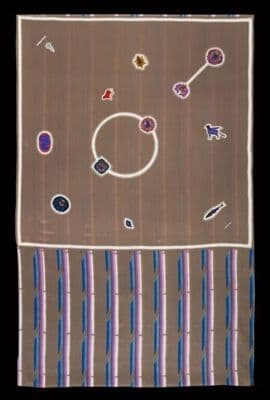
Brown Purple Blue Printed Silk Kaftan Dress
1970s · 1970s · Japanese
Designer
Issey Miyake
Production
ready-to-wear
Material
printed silk
Culture
Japanese
Movement
Japanese avant-garde fashion · Hippie / Counterculture
Influences
Japanese graphic design · Middle Eastern kaftan
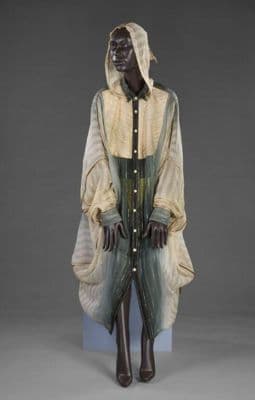
A loose-fitting kaftan dress constructed from printed silk featuring two distinct textile zones. The upper section displays a brown ground with scattered geometric and celestial motifs including circles, dots, and linear elements in purple and blue. The lower portion features vertical stripes in alternating purple, blue, and cream tones. The garment appears to have wide sleeves and an unstructured silhouette typical of 1970s artistic dress. The textile design reflects Tadanori Yokoo's graphic design aesthetic combined with Issey Miyake's architectural approach to garment construction, creating a piece that bridges Japanese design sensibility with Western kaftan forms.
dressloose fitmaxi
Connected To
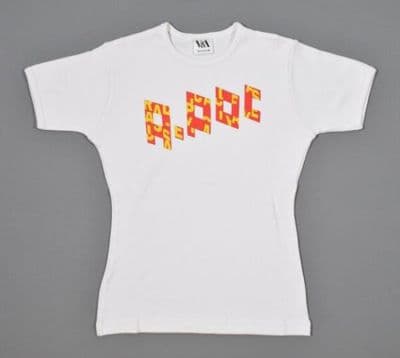
71%
Designer·Issey MiyakeTechnique·screen-printing
SHARED30 years · cross-category
These two pieces reveal Issey Miyake's lifelong obsession with transforming flat graphics into dimensional experiences on the body. The early 1970s kaftan uses geometric circles and lines that seem to float across the silk like a modernist constellation, while the 2000s tee breaks down "APOC" lettering into pixelated fragments that suggest digital decay.
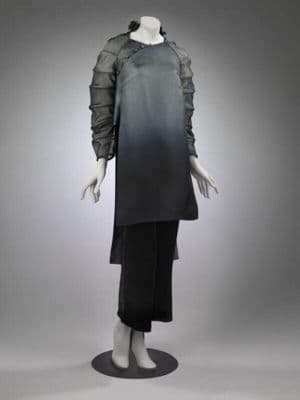
Pull the Thread→
Follow this garment wherever the graph leads