V&A
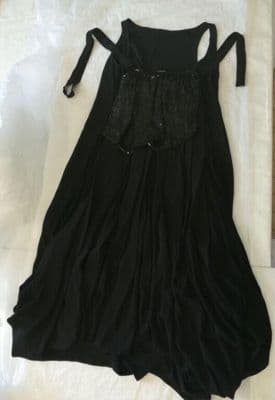
Black Silk Jersey Dress with Integrated Sequined Bag
1990s · 2000s · Japanese
Designer
Yohji Yamamoto
Production
ready-to-wear
Material
silk jersey
Culture
Japanese
Movement
Deconstruction · Japanese avant-garde · Minimalism
Influences
Japanese anti-fashion movement · deconstructed tailoring
A black silk jersey dress featuring Yamamoto's signature deconstructed aesthetic with thin shoulder straps and an asymmetrical, flowing silhouette that pools at the bottom. The garment incorporates a sequined bag element at the back, creating a hybrid fashion-function piece typical of conceptual design. The lightweight silk drapes naturally from the narrow straps, creating organic folds and gathering at the hem. The construction appears minimal with raw or unfinished edges, reflecting the designer's anti-fashion philosophy that challenges conventional garment boundaries and Western tailoring traditions.
dressloose fitmaxi
Connected To
Influences·deconstructed tailoringMovement·DeconstructionFunction·avant-garde
Echoes Across Time

Pull the Thread→
Follow this garment wherever the graph leads