V&A
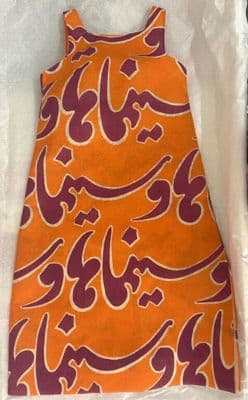
Orange Paper Shift Dress with Paisley Pattern
1970s · 1960s · British
Designer
Dispo (Meyersohn & Silverstein Ltd)
Production
mass-produced
Material
bonded printed paper
Culture
British
Movement
Space Age fashion · Pop Art · Hippie / Counterculture
Influences
psychedelic textile patterns · disposable consumer culture
A sleeveless shift dress constructed from bonded paper with a vibrant orange ground featuring an abstract paisley-inspired pattern in burgundy and cream. The dress displays a simple A-line silhouette with wide armholes and a straight hemline falling to mid-thigh length. The surface pattern consists of flowing, organic curved motifs that create an all-over repeat design typical of psychedelic-influenced textiles. The paper construction represents the experimental disposable fashion movement of the 1960s, when manufacturers explored alternative materials as part of the Space Age aesthetic. The dress appears to be cut from a single piece of printed paper with minimal seaming, demonstrating the utilitarian approach to these novelty garments that were intended for limited wear.
dressa-linescoop neckabove-the-knee
Connected To
Movement·Pop ArtTechnique·screen-printingMotif·abstract-organic
Pull the Thread→
Follow this garment wherever the graph leads