V&A
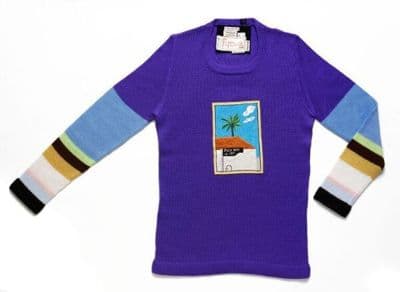
Purple Acrylic Novelty Sweater with Tropical Beach Scene
1970s · 1970s · English
Production
ready-to-wear
Material
machine knitted acrylic
Culture
English
Movement
Pop Art · Hippie / Counterculture
Influences
pop art graphics · resort wear imagery
A purple machine-knitted acrylic sweater featuring a central appliqué or printed panel depicting a tropical beach scene with palm tree and sailboat. The sleeves display horizontal color-blocking in light blue, yellow, white, and black stripes creating a bold graphic effect. The ribbed crew neckline and cuffs are finished in purple matching the body. The sweater demonstrates early 1970s pop art influences with its bright color palette and pictorial motif, reflecting the era's embrace of synthetic materials and playful graphic design. The construction appears to be standard machine knitting with the decorative elements likely applied post-production.
sweaterregular fitcrew neckhip length
Connected To
67%
Influences·pop art graphics
SHARED20 years · cross-culture · cross-category
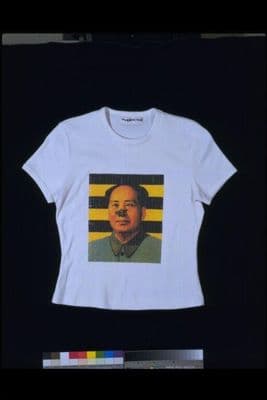
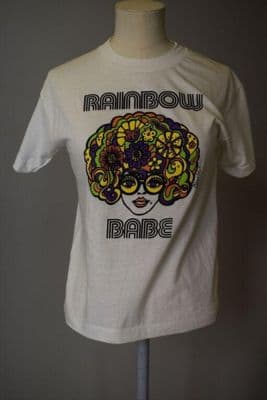
These two pieces reveal how pop art's graphic sensibility filtered through decades of casual wear, from the psychedelic swirl of that 1970s "Rainbow Babe" tee to the crisp geometric palm tree motif on the purple sweater's chest. The earlier shirt's kaleidoscopic face—all groovy curves and saturated color—speaks the same visual language as the later sweater's postcard-perfect beach scene, just translated through different decades of optimism.
Echoes Across Time

Pull the Thread→
Follow this garment wherever the graph leads