V&A
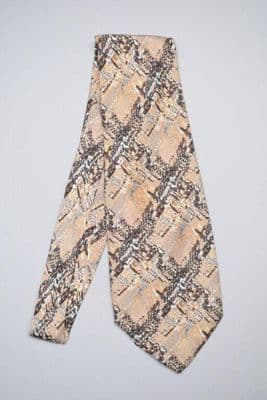
Brown Printed Silk Geometric Pattern Necktie
1970s · 1970s · English
Designer
Just Men
Production
ready-to-wear
Material
printed silk
Culture
English
Movement
Hippie / Counterculture
Influences
Op Art geometric patterns · 1970s graphic design
A men's necktie in printed silk featuring an abstract geometric pattern in cream, brown, and black. The design consists of interlocking angular shapes creating a complex tessellated surface that reflects the bold graphic sensibilities of 1970s menswear. The tie appears to be of standard width typical of the mid-1970s, neither the narrow styles of the early decade nor the wider styles that would follow. The silk has a smooth finish with crisp pattern definition, suggesting quality construction. The geometric motifs show influence from contemporary graphic design and Op Art movements, representing the period's embrace of bold visual statements in men's formal accessories.
tieregular fit
Connected To
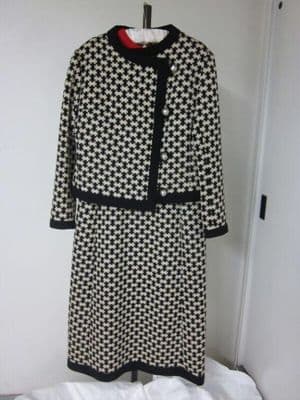
Influences·Op Art geometric patternsMovement·Hippie / Counterculture
SHARED10 years · cross-culture · cross-category
That snakeskin-patterned tie and the polka-dotted suit speak the same visual language of the 1970s, when geometric patterns migrated from Op Art galleries into wardrobes with psychedelic intensity. The tie's interlocking diamond scales and the suit's dense dot matrix both create that signature '70s optical vibration—patterns so insistent they seem to move on their own.
Pull the Thread→
Follow this garment wherever the graph leads