THE MET
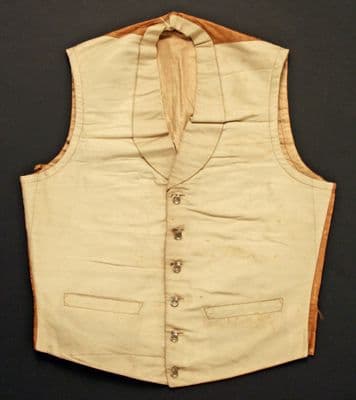
Cream Silk Waistcoat with Brown Trim
Fin de Siecle / Gibson Girl · 1890s · American
Production
handmade
Material
silk
Culture
American
A cream-colored silk waistcoat with tan and brown trim featuring six mother-of-pearl buttons down the center front. The vest displays classic 1890s tailoring with a deep V-neck opening, fitted silhouette that would contour to the torso, and two welted pockets at the waist. The construction shows precise seaming and professional finishing typical of late Victorian menswear. The silk fabric appears to have a subtle ribbed or corded texture, and the contrasting trim along the edges adds definition to the garment's lines. This piece represents the refined masculine formal wear of the Gilded Age period.
vestregular fitv-neckhip length
Connected To
Worn with·suit jacketWorn with·trousers
SHARED70 years · cross-culture · cross-category
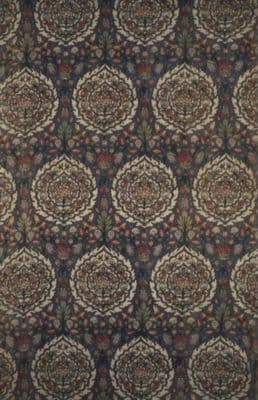
That cream silk waistcoat's six-button front and deep V-neck cut a clean line through the fussy excess of fin de siècle menswear, while the paisley-lined overcoat seventy years later carries the same disciplined tailoring DNA — both garments using rich contrast (brown piping there, burgundy paisley here) as punctuation rather than decoration.
Text64%
Image63%
Entity28%
Worn with·dress shirtWorn with·trousers
SHARED100 years · cross-culture · cross-category
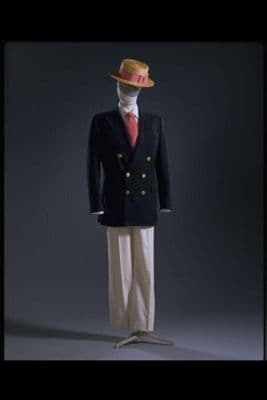
The cream silk waistcoat's six-button front and notched lapels establish the fundamental grammar of structured menswear that the navy blazer still speaks a century later. Where the Victorian piece achieves its authority through precise tailoring and that crisp brown piping—every seam a statement of sartorial discipline—the 1980s blazer translates that same commanding presence into brass buttons and bold shoulders.
Worn with·dress shirtWorn with·suit jacket
SHARED100 years · cross-culture · cross-category
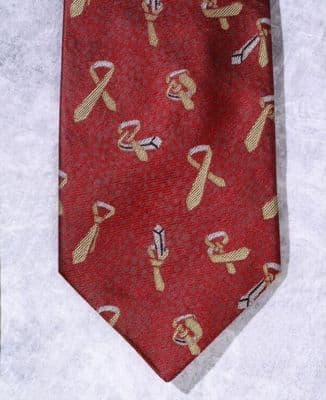
The cream silk waistcoat's neat row of buttons and the burgundy tie's scattered golden nooses both speak the same dark language of restraint—one literal, one symbolic. Where the Victorian vest channels control through its precise tailoring and formal structure, the 1980s tie makes gallows humor of masculine conformity, turning the noose into a cheeky repeat pattern for the power-lunch crowd.
Worn with·dress shirtWorn with·suit jacket
SHARED80 years · cross-culture · cross-category
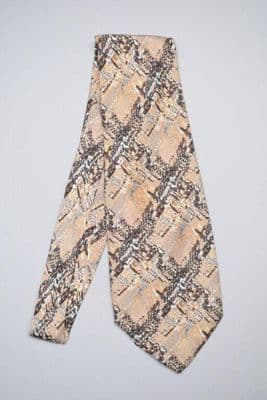
That cream silk waistcoat with its meticulous button stance and knife-sharp tailoring speaks the same formal language as the geometric necktie, just translated across nearly a century of menswear evolution. Both pieces anchor themselves in the precise territory where a man's torso meets his shirt—the waistcoat hugging close with its six buttons and welted pockets, the tie falling in that same crucial real estate below the collar.
Pull the Thread→
Follow this garment wherever the graph leads