1980s · 1990s · British
Designer
Daks-Simpson
Production
ready-to-wear
Material
wool
Culture
British
Movement
Power Dressing
Influences
naval officer uniform · British club blazer tradition
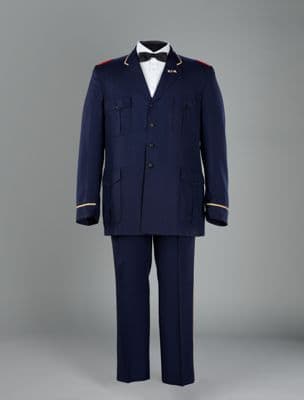
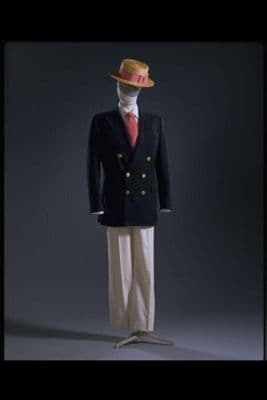
A navy wool double-breasted blazer with six brass buttons arranged in two columns of three. The jacket features peaked lapels with moderate width, structured shoulders with minimal padding, and a fitted waist that creates a clean silhouette. The construction shows precise tailoring with crisp edges and well-defined seaming. Worn over cream-colored trousers with a red tie, the ensemble represents the refined casual menswear aesthetic of the mid-1990s. The blazer's proportions reflect the decade's move toward cleaner, less exaggerated tailoring compared to the power-shoulder styles of the 1980s, emphasizing quality construction and classic British naval-inspired design elements.
These navy blazers span three decades but share the same foundational grammar: structured shoulders, clean lapels, and that particular shade of midnight blue that photographs like authority itself. The contemporary single-breasted version has shed the 1980s double-breasted blazer's military flourishes—those gleaming brass buttons and peaked lapels that once signaled power-dressing ambition—in favor of a sleeker, more democratic silhouette.
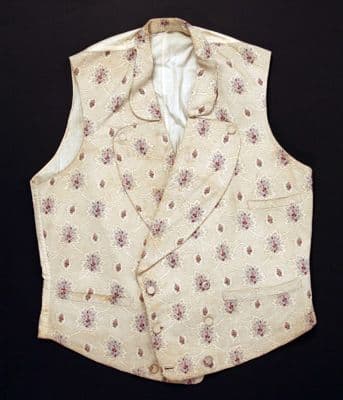
The cream waistcoat's delicate burgundy florals and the navy blazer's gleaming brass buttons represent two different eras of masculine authority dressing, yet both rely on the same visual strategy: pattern as punctuation. Where the Victorian vest uses its scattered blooms to soften the formality of business dress without compromising respectability, the 1980s blazer deploys its regimental buttons like medals, each one a small assertion of power.

Follow this garment wherever the graph leads
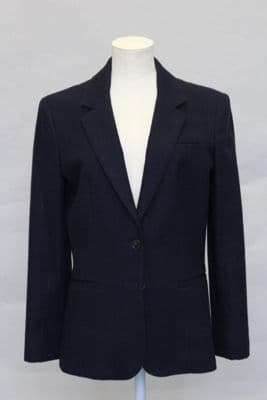
These two blazers capture the twin poles of 1980s power dressing: the American version strips away ornament for pure architectural authority, while the British iteration doubles down on naval tradition with its regimental brass buttons and deeper double-breasted stance. Both share that decade's obsession with shoulder emphasis and structured tailoring, but where the single-breasted blazer whispers corporate competence, the double-breasted one shouts old-money confidence.
The cream waistcoat's delicate burgundy florals and the navy blazer's gleaming brass buttons represent two different eras of masculine authority dressing, yet both rely on the same visual strategy: pattern as punctuation. Where the Victorian vest uses its scattered blooms to soften the formality of business dress without compromising respectability, the 1980s blazer deploys its regimental buttons like medals, each one a small assertion of power.
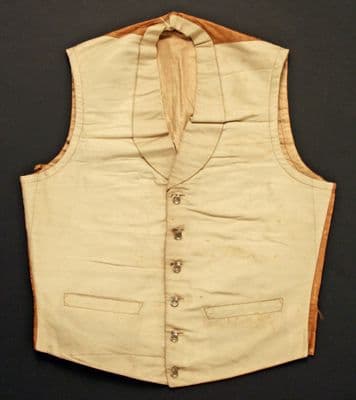
The cream silk waistcoat's six-button front and notched lapels establish the fundamental grammar of structured menswear that the navy blazer still speaks a century later. Where the Victorian piece achieves its authority through precise tailoring and that crisp brown piping—every seam a statement of sartorial discipline—the 1980s blazer translates that same commanding presence into brass buttons and bold shoulders.

The cream silk waistcoat's six-button front and notched lapels establish the fundamental grammar of structured menswear that the navy blazer still speaks a century later. Where the Victorian piece achieves its authority through precise tailoring and that crisp brown piping—every seam a statement of sartorial discipline—the 1980s blazer translates that same commanding presence into brass buttons and bold shoulders.