V&A
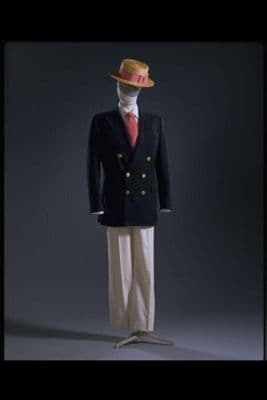
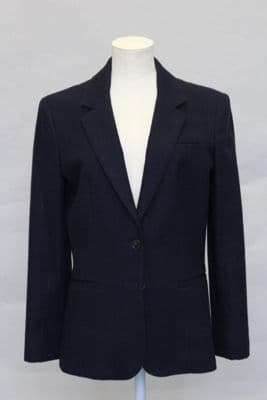
Navy Wool Structured Blazer with Notched Lapels
1980s · 1980s · American
Production
ready-to-wear
Material
wool
Culture
American
Movement
Power Dressing
Influences
menswear suiting · 1940s military tailoring
A navy wool blazer displaying the characteristic structured silhouette of 1980s power dressing. The jacket features a notched lapel collar with moderate width, single-breasted closure with one visible button, and a fitted torso that emphasizes the waist. The shoulders appear to have subtle padding creating a defined shoulder line without extreme exaggeration. Two flap pockets are positioned at hip level. The construction shows precise tailoring with clean lines and sharp edges typical of professional menswear-inspired suiting. The wool fabric appears to be a smooth weave with a matte finish, contributing to the garment's authoritative business aesthetic that became emblematic of women's professional wear during the Reagan era.
jacketregular fithip length
Connected To

Influences·1940s military tailoringMovement·Power DressingWorn with·blouse
SHARED30 years
Both blazers draw from the same well of 1940s military precision—sharp shoulders, clean lines, and that particular navy authority that says "boardroom general." The 2000s version softens the 1980s original's aggressive shoulder padding into something more wearable, but keeps the essential DNA: structured lapels, strategic button placement, and that unmistakable silhouette that transforms its wearer into someone who gets things done.
Pull the Thread→
Follow this garment wherever the graph leads