THE MET
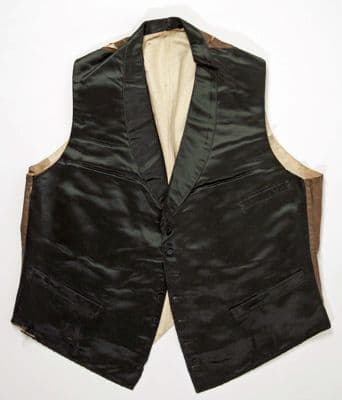
Dark Green Silk Formal Waistcoat with Cream Back
Victorian Early / Crinoline · 1850s · American or European
Production
handmade
Material
silk
Culture
American or European
A mid-19th century gentleman's waistcoat featuring dark forest green silk as the primary fabric with contrasting cream silk back panels and brown leather or fabric trim along the armholes. The garment displays typical 1850s construction with a deep V-neckline, fitted silhouette that would sit snugly over a shirt and under a frock coat, and a button front closure. The dark green silk appears to have a subtle sheen characteristic of formal evening wear silks of the period. The waistcoat's proportions reflect the Victorian emphasis on a defined masculine torso, with the garment designed to create a smooth line from chest to waist when worn as part of a complete three-piece suit.
vesttight fitv-neckhip length
Connected To
Worn with·dress shirtWorn with·trousersFunction·formal-evening
SHARED170 years · cross-culture · cross-category
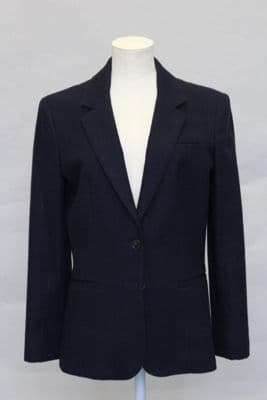
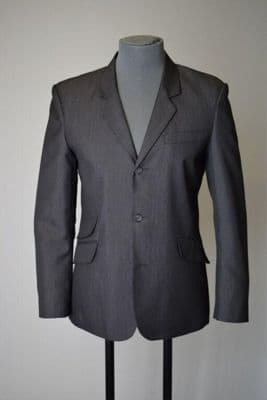
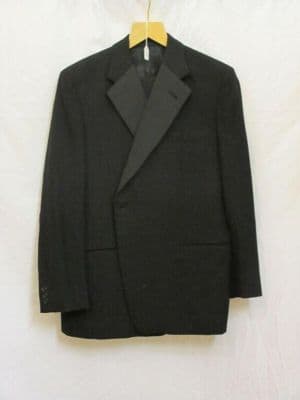
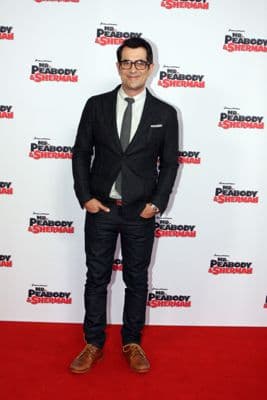
The modern blazer's sharp lapels and structured shoulders echo the Victorian waistcoat's precise tailoring vocabulary, both garments speaking the same language of masculine formality despite being separated by 170 years and an ocean of social change. Where the waistcoat's dark green silk and cream cotton back reveal the era's obsession with hidden luxury—why waste expensive fabric where no one can see it?—the blazer democratizes that same attention to cut and proportion in affordable wool.
54%
Worn with·dress shirtWorn with·trousers
SHARED130 years · cross-culture · cross-category
Text65%

Worn with·dress shirtWorn with·trousers
SHARED170 years · cross-culture · cross-category
Text62%
Worn with·dress shirtFunction·formal-evening
SHARED130 years · cross-culture · cross-category
Text74%
Echoes Across Time
2020s → Victorian Early / Crinoline · 170yr58%
SHARED
The modern blazer's sharp lapels and structured shoulders echo the Victorian waistcoat's precise tailoring vocabulary, both garments speaking the same language of masculine formality despite being separated by 170 years and an ocean of social change. Where the waistcoat's dark green silk and cream cotton back reveal the era's obsession with hidden luxury—why waste expensive fabric where no one can see it?—the blazer democratizes that same attention to cut and proportion in affordable wool.
Worn with·dress shirtWorn with·trousersFunction·formal-evening
Pull the Thread→
Follow this garment wherever the graph leads