V&A
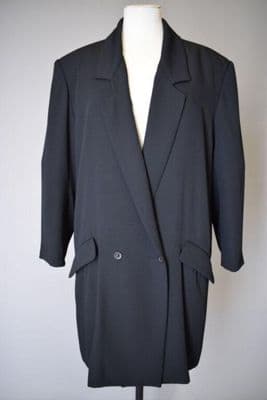
Black Wool Crêpe Oversized Double-Breasted Jacket
1980s · 1990s · British
Designer
Betty Jackson
Production
ready-to-wear
Material
wool crêpe
Culture
British
Movement
Deconstructivism · Power Dressing
Influences
1940s zoot suit proportions · 1980s power shoulder legacy
This dramatically oversized black wool crêpe jacket features an exaggerated boxy silhouette characteristic of 1990s power dressing taken to theatrical extremes. The double-breasted front closure with large buttons creates strong vertical lines, while the peaked lapels frame the deep V-neck opening. The jacket extends well past the hips, creating a coat-like length that overwhelms the body's natural proportions. The sleeves appear voluminous and long, contributing to the garment's architectural presence. The crêpe fabric provides structure while maintaining a matte finish. This piece represents the 1990s fascination with deconstructed tailoring and gender-neutral silhouettes, where traditional menswear elements were amplified and reimagined for contemporary fashion expression.
jacketoversizedhip length
Connected To
Movement·DeconstructivismFunction·avant-garde
SHARED10 years · cross-culture
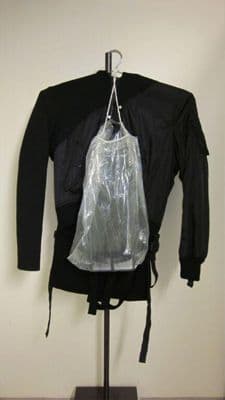
The oversized double-breasted jacket from the 1980s and the spiked hood technical ensemble share deconstructivism's fundamental impulse to dismantle and reimagine the conventional silhouette, but they attack it from opposite ends of the spectrum.
Pull the Thread→
Follow this garment wherever the graph leads