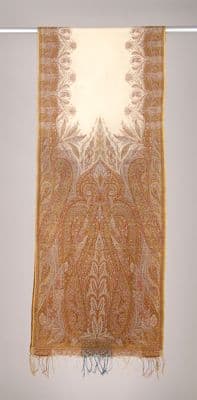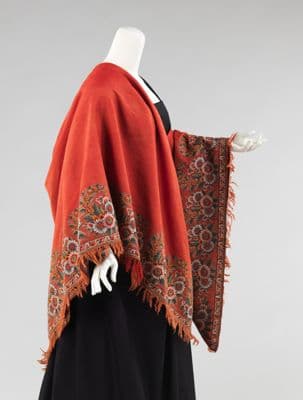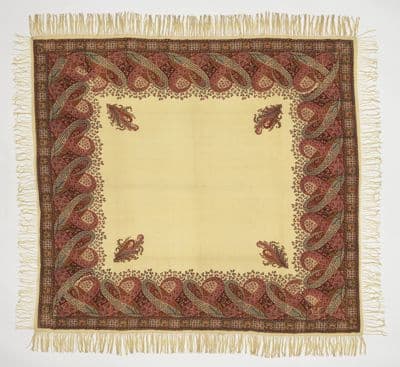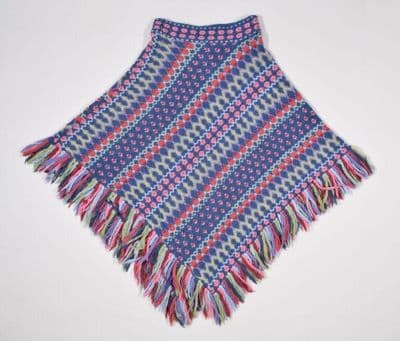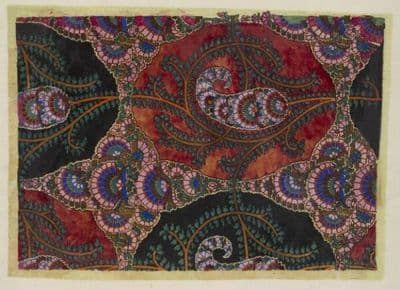
These two shawls trace the evolution of Europe's obsession with the Kashmir paisley, from the cream stole's restrained interpretation of the boteh motif—those teardrop forms climbing symmetrically up the center like botanical specimens pressed in a Victorian album—to the riot of jewel-toned paisleys that swirl across the later piece in burgundy, emerald, and purple.