Great Depression · 1930s · Korean
Production
handmade
Material
silk
Culture
Korean
Influences
traditional Korean hanbok construction · Joseon dynasty court dress
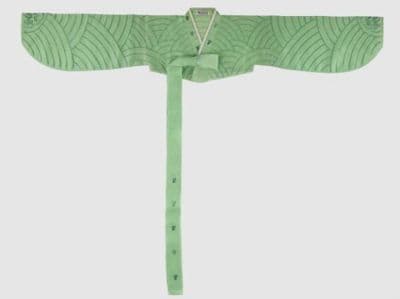
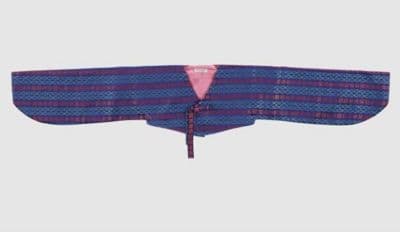
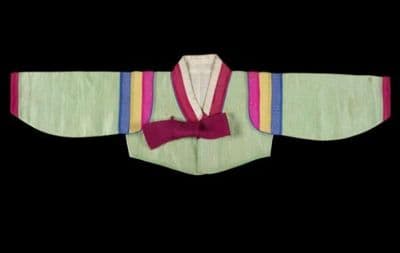
A traditional Korean children's jeogori jacket featuring the characteristic wide, curved sleeves and wrap-front closure typical of hanbok construction. The garment displays vibrant silk in pale green as the primary color, with contrasting magenta ties and royal blue accent stripes on the sleeves. The jacket shows traditional Korean tailoring with curved sleeve ends, a short cropped length that would sit at the waist, and the distinctive V-neck wrap closure secured with fabric ties. The silk appears to have a subtle sheen, and the color blocking follows traditional Korean aesthetic principles with bold, harmonious color combinations that would complement a full hanbok ensemble.


These two jeogori jackets reveal how Korean traditional dress held its essential DNA across half a century, even as subtle shifts marked changing times. The earlier sage green piece shows the classic proportions—those dramatically wide sleeves that taper to fitted cuffs, the precise V-neck closure, and the ribbon ties (goreum) that define hanbok's architectural silhouette.
Follow this garment wherever the graph leads
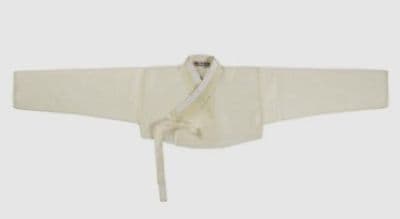
These two jeogori jackets reveal how Korean traditional dress held its essential DNA across half a century, even as subtle shifts marked changing times. The earlier sage green piece shows the classic proportions—those dramatically wide sleeves that taper to fitted cuffs, the precise V-neck closure, and the ribbon ties (goreum) that define hanbok's architectural silhouette.
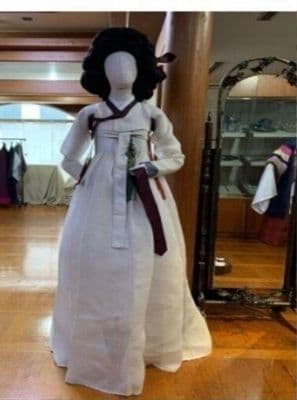
The striped jeogori transforms traditional Korean court dress into something that feels almost like a rugby shirt—those bold magenta and blue bands across pale green silk giving ceremonial wear an unexpectedly sporty punch. Fifty years later, the cream jeogori strips away all that visual noise, returning to the pure, unadorned lines that defined centuries of Joseon elegance.
These two jeogori jackets reveal how Korean traditional dress held its formal DNA steady even as color palettes shifted with the times. The earlier deep purple piece carries the weight of Joseon court tradition in its saturated hue and precise geometric banding, while the Depression-era jacket lightens to pale green with vivid magenta and blue accents—a palette that feels almost optimistic against the economic darkness of the 1930s.
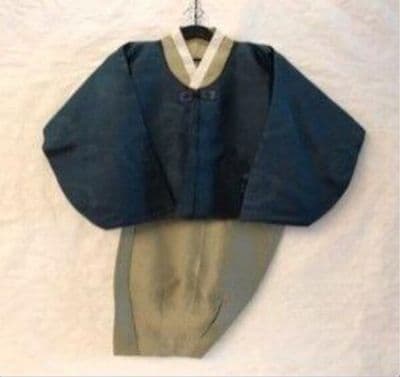
These two hanbok pieces reveal how Korean traditional dress maintained its essential DNA even as it adapted across decades of social upheaval. The navy ensemble's voluminous jeogori sleeves and the Depression-era jacket's more fitted proportions both employ the same fundamental construction—that distinctive curved underarm seam and the way the fabric falls from the shoulder—but the later piece shows how economic hardship compressed the silhouette without abandoning the form's graceful logic.


The striped jeogori transforms traditional Korean court dress into something that feels almost like a rugby shirt—those bold magenta and blue bands across pale green silk giving ceremonial wear an unexpectedly sporty punch. Fifty years later, the cream jeogori strips away all that visual noise, returning to the pure, unadorned lines that defined centuries of Joseon elegance.