SMITHSONIAN
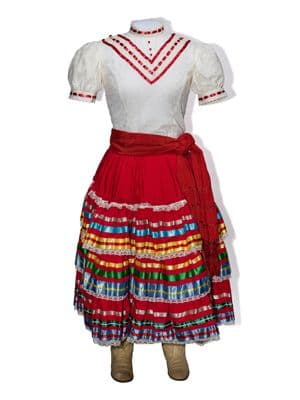
White Cotton Folk Blouse with Red Chevron Embroidery
2020s · 2000s · Latin American
Production
handmade
Material
cotton
Culture
Latin American
Movement
Cottagecore
Influences
traditional Mexican tehuana dress · Central American huipil styling
A traditional Latin American folk costume featuring a white cotton blouse with red chevron embroidery across the chest and matching trim on the short puffed sleeves and high neckline. The ensemble includes a vibrant red cotton skirt with multiple horizontal bands of colorful ribbon trim in blue, yellow, green, and other bright hues creating a festive striped pattern. The skirt appears to be gathered at the waist with ties and falls to mid-calf length in a full, circular silhouette. The geometric chevron motifs on the bodice are executed in red thread, creating a distinctive V-shaped pattern that emphasizes the neckline and chest area.
dressfit and flarehigh neckmidi
Connected To
Worn with·blouseWorn with·skirt
SHARED20 years · cross-culture · cross-category
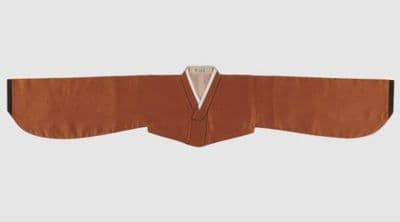
These two pieces reveal how the cropped silhouette speaks a universal language of feminine proportion, whether it's framing a full folk skirt or cutting a sharp modern line. The white blouse with its red chevron embroidery and puffed sleeves creates volume that gets anchored by its cropped hemline, while the rust silk bolero strips away all ornament to let pure geometry do the talking—that same decisive cut that stops just above the natural waist.
Echoes Across Time
2020s → Traditional Indian · 40yr58%
SHARED
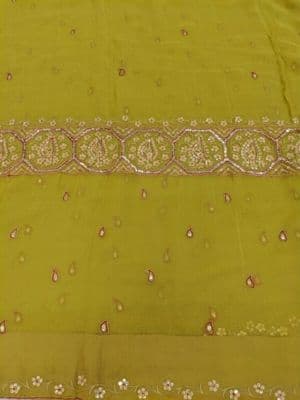
Both pieces speak the same language of celebration through meticulous hand-embroidery, though one whispers it in chevrons and the other sings it in paisley. The folk blouse's crisp red zigzags marching across white cotton echo the disciplined geometry found in the sari's silver threadwork, where intricate circular motifs dance along that chartreuse silk like coins catching light.
Worn with·blouseTechnique·hand-embroideryFunction·festival-celebration
Pull the Thread→
Follow this garment wherever the graph leads