V&A
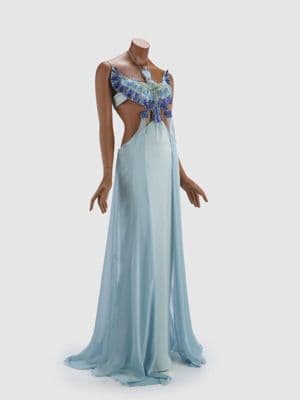
Blue Silk Satin Gown with Beaded Falcon Embroidery
2020s · 2020s · Egyptian
Designer
Farah Wali
Production
haute couture
Material
silk satin
Culture
Egyptian
Movement
Dopamine Dressing
Influences
Ancient Egyptian falcon imagery · Empire waist classical revival
A floor-length evening gown in powder blue silk satin featuring an empire waistline with elaborate beaded embroidery across the bust. The bodice displays intricate glass bead work in blues and golds depicting a falcon motif, referencing ancient Egyptian iconography. Thin shoulder straps support the fitted bodice which flows into a straight, column-like silhouette. A dramatic chiffon train in matching blue extends from the back, creating movement and grandeur. The beadwork appears to be hand-applied with geometric and figurative elements typical of Egyptian decorative arts, while the overall construction combines contemporary evening wear silhouettes with cultural heritage motifs.
dressa-linesweetheartfloor length
Connected To
56%
Movement·Dopamine DressingTechnique·beadwork
SHAREDsame era · cross-culture · cross-category
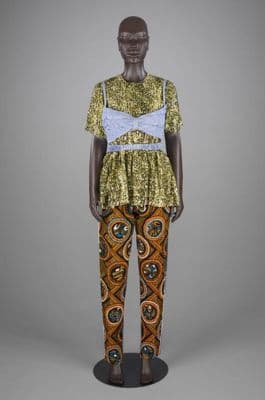
Both garments pulse with the same contemporary hunger for joy-through-ornament, but they arrive there through completely different cultural vocabularies. The Egyptian gown channels ancient pharaonic symbolism through its soaring falcon embroidery, transforming ceremonial grandeur into flowing silk satin that catches light like the Nile, while the Nigerian ensemble layers geometric ankara patterns with strategic glass beadwork that creates its own constellation of sparkle.
Pull the Thread→
Follow this garment wherever the graph leads