SMITHSONIAN
Golden Yellow Burgundy Wax Print Cotton Dashiki
1970s · 1970s · African American
Production
ready-to-wear
Material
cotton wax print
Culture
African American
Movement
Black Pride Movement · Hippie / Counterculture
Influences
West African wax print tradition · 1970s Afrocentric fashion movement
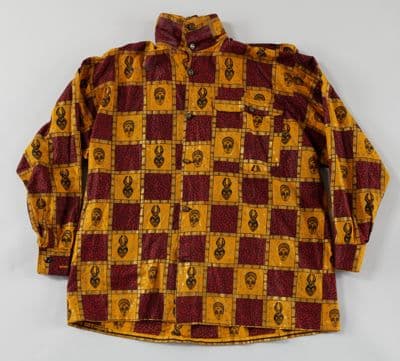
A long-sleeved shirt constructed from African wax print cotton featuring a bold checkerboard pattern. Each square alternates between golden yellow and deep burgundy red backgrounds, with stylized mask or face motifs printed in contrasting colors within each square. The shirt has a standard collar, button-front closure, and straight-cut sleeves with button cuffs. The geometric repetition of the mask pattern creates a striking visual rhythm across the fabric surface. The wax print technique produces the characteristic waxy hand and vibrant, saturated colors typical of West African textiles that became popular in African American fashion during the 1970s cultural pride movement.
shirt/blouseregular fitcollarlesship length
Connected To
Influences·1970s Afrocentric fashion movementInfluences·West African wax print traditionMovement
Pull the Thread→
Follow this garment wherever the graph leads