V&A
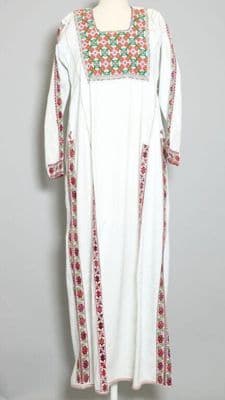
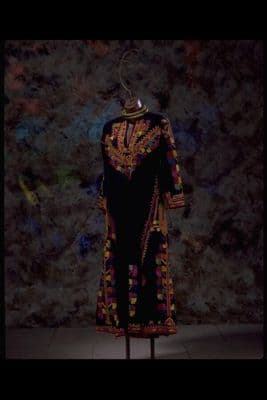
Black Linen Caftan with Silk Embroidery
1970s · 1970s · Palestinian
Production
handmade
Material
silk-embroidered linen
Culture
Palestinian
Movement
Hippie / Counterculture
Influences
traditional Palestinian thob · Levantine embroidery traditions
A full-length Palestinian caftan constructed from black linen with elaborate silk embroidery covering the chest panel, sleeves, and hem borders. The embroidery features traditional geometric and floral motifs executed in vibrant orange, red, and gold threads, creating dense decorative bands that contrast dramatically with the black ground fabric. The garment displays a straight, loose-fitting silhouette typical of traditional Middle Eastern robes, with wide sleeves and a floor-length hemline. The chest panel showcases the most intricate needlework, with symmetrical patterns that likely hold cultural significance. The heavy silk thread embroidery creates raised texture across the surface, demonstrating skilled hand-embroidery techniques passed down through generations of Palestinian textile artisans.
dressloose fitround neckfloor length
Connected To
Influences·Levantine embroidery traditionsTechnique·hand-embroideryFunction·
Echoes Across Time
Great Depression → 1970s · 35yr74%
SHARED
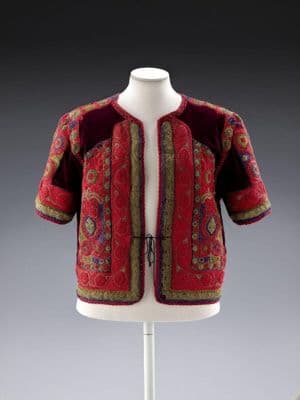
These two garments trace the evolution of Palestinian tatreez embroidery from intimate to expansive expression. The 1930s taqsireh jacket concentrates its silk thread florals into a compact, almost jewel-box format—every inch of that red velvet surface dense with pattern, the kind of meticulous work that marked special occasion dress in village communities.
Influences·Levantine embroidery traditionsTechnique·hand-embroideryFunction·festival-celebration
Pull the Thread→
Follow this garment wherever the graph leads